Conversion Rate Optimization Shopify: The Margin-Friendly Guide
Mar 1, 2026
|
Published
True conversion rate optimization for Shopify isn't about chasing tiny technical fixes. It's a profit-first mindset. The goal is to turn one-time shoppers into high-value, repeat customers who stick around for the long haul. This means moving away from margin-killing discounts and confusing point systems, and embracing sustainable growth by boosting customer lifetime value (LTV) and average order value (AOV) with smarter incentives, like native Shopify store credit.
Why Your Shopify Store Is Bleeding Profit
If your conversion rate is stuck around the industry average, you’re not just missing out on sales—you're leaving a trail of cash on the table every single day. These aren't just one-off losses; they are silent profit leaks that slowly drain the life out of your business and stunt its growth.
So many store owners fall into the same trap: they try to plug these leaks with a constant stream of discount coupons. A flashy "20% OFF" banner might give you a quick sales bump, sure. But it’s a race to the bottom that demolishes your profit margins and trains customers to only buy when there’s a sale. This cycle devalues your brand and fills your customer list with bargain hunters, not the high-value, loyal fans who drive profitable growth.
Shifting Your Focus from Discounts to Lifetime Value
The real goal of conversion rate optimization isn’t just getting more first-time sales. It's about building a profitable, resilient business. To pull that off, you need to shift your focus from single transactions to the two metrics that actually matter for long-term health:
Average Order Value (AOV): How much is a customer willing to spend in a single checkout?
Customer Lifetime Value (LTV): How much is a customer worth to your brand over their entire relationship with you?
When you optimize for AOV and LTV, you stop the bleeding. You start building a brand that can weather any storm. This requires a smarter incentive—one that nudges customers to spend more right now and gives them an undeniable reason to come back later.
Key Takeaway: True conversion optimization is a profit-first strategy. It moves away from the short-term high of discounts and focuses on building a base of loyal customers who boost lifetime value and average order value.
The Power of Margin-Friendly Incentives
The best way I've found to boost both AOV and LTV is by using margin-friendly incentives, specifically native Shopify store credit. Unlike clunky point systems or brand-eroding discounts, store credit feels like real cash. It's an asset your customers have earned, creating a powerful psychological pull to return and spend it.
This model completely changes customer behavior. Think about it: a shopper who is just $10 away from earning a $15 store credit is incredibly motivated to add one more item to their cart. Bam, you've just increased your AOV. And once they receive that credit, you’ve essentially pre-sold their next visit, driving repeat purchases and pumping up your LTV. It’s a healthy, profitable growth cycle that directly impacts your bottom line. If you really want to get into the weeds on this, check out our guide on how to improve profit margins for your store.
To see what's possible, just look at the data. Shopify stores typically see conversion rates between 1.4% and 3.2%. The top performers, however, blow those numbers out of the water by systematically plugging conversion leaks. For example, the brand Sunday Citizen improved their Largest Contentful Paint by 25% and slashed Cumulative Layout Shift by 61% just by optimizing their images and layout. The result? A 4% drop in bounce rates and a 6% lift in conversions. That’s a massive revenue boost without spending a single extra dollar on ads.
Discount Coupons vs. Native Store Credit
Deciding between traditional discounts and a store credit system isn't just a tactical choice; it's a strategic one that defines your brand's relationship with its customers and its bottom line. Here’s a clear breakdown of how they stack up, with a focus on lifetime value and average order value.
Metric | Discount Coupons | Native Store Credit (e.g., Redeemly) |
|---|---|---|
Profit Margins | Directly reduces margin on every sale. Attracts price-sensitive shoppers. | Protects margins by rewarding customers after a full-price purchase. |
Average Order Value (AOV) | Rarely has an impact. Can incentivize buying the cheapest item to use the code. | Directly increases AOV by incentivizing customers to hit a spending threshold. |
Repeat Purchase Rate | Minimal impact. Creates "one-and-done" deal seekers waiting for the next sale. | High impact. Store credit is a powerful, tangible reason for customers to return. |
Customer Lifetime Value (LTV) | Erodes LTV by training customers to only buy on discount, lowering their total value. | Maximizes LTV by creating a cycle of repeat, full-margin purchases. |
Brand Perception | Can signal a "cheap" or "desperate" brand. Attracts low-value customers. | Positions the brand as premium and customer-centric, fostering genuine loyalty. |
Ultimately, while discounts offer a quick fix, store credit builds a sustainable, profitable future. It shifts the entire dynamic from a transactional one to a relational one, which is the cornerstone of any great ecommerce brand focused on lifetime value.
Your On-Site Playbook To Drive Higher AOV
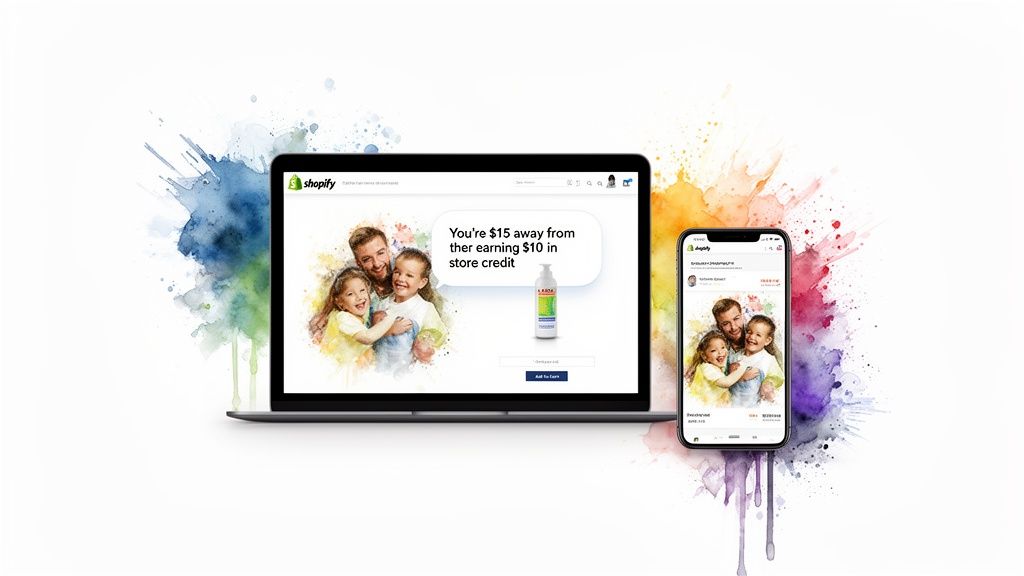
Let’s be honest: the race to the bottom with endless discount codes is a losing game. It eats your margins and trains customers to wait for a sale. The real path to a higher average order value (AOV) is about creating a shopping experience that makes people want to spend more, not because something is cheaper, but because they’re earning real value.
This is where your on-site strategy becomes a serious engine for conversion rate optimization on Shopify, with a sharp focus on boosting both AOV and customer lifetime value (LTV). We're not talking about a site-wide teardown. This playbook is all about actionable, prioritized changes that directly influence how much customers spend in one go, from foundational tweaks to the most powerful lever you have: margin-friendly native store credit.
Start with Smart On-Site Nudges
Before a shopper can get excited about a reward, they need to enjoy being on your site. I've seen countless stores where tiny friction points—a slow-loading image, a confusing menu—add up to create subconscious hesitation. That hesitation is what stops someone from adding that one extra item to their cart.
This is especially true on mobile, where most people browse but conversion rates notoriously lag. Make sure your product pages are lightning-fast, your images are crisp but optimized, and the "Add to Cart" button is big, bold, and impossible to miss. Nailing these fundamentals creates a smooth runway for the AOV-boosting tactics to come.
Once the path to purchase is clear, it's time to turn your product and cart pages into interactive reward zones. The goal is simple: shift the customer’s mindset from "How much am I spending?" to "What can I earn?" This is where threshold-based rewards completely change the game.
Use Threshold Rewards to Gamify Spending
The real magic starts when you stop giving away discounts and start offering incentives through native store credit. A discount is a one-time hit to your profit. A store credit reward, on the other hand, is an investment in a customer’s next purchase, directly fueling higher LTV.
A shopper might think twice about spending an extra $20 just to save 10%. But that same person will eagerly spend an extra $20 to earn a $15 store credit for their next order. One feels like a cost; the other feels like an achievement that increases their lifetime value with your brand.
Instead of a generic "Free Shipping over $100" banner that everyone ignores, you need to integrate dynamic messaging directly into the shopping journey. This is where a native Shopify app like Redeemly is so effective. It lets you pop up powerful, personalized messages that create an irresistible reason to increase cart value.
Picture this: a customer is looking at a $45 sweater. Right there on the product page, a small message appears: "You're just $30 away from earning $10 in store credit!"
That one sentence reframes the entire purchase. It's no longer just about buying a sweater; it's about unlocking a tangible reward. The customer is now actively looking for something else to add—not because you forced them, but because they want to "win" the reward. They'll grab those socks or that hat they were only half-considering a minute ago, boosting your AOV instantly.
Implement Dynamic Cart Messaging
This strategy gets even more potent in the cart. The cart is the final decision point before checkout, making it the perfect spot to reinforce the value of spending just a little more.
Here’s how you can structure these on-site messages to really hit home:
On Product Pages: Show their progress toward the next reward tier. This turns browsing into a fun, goal-oriented activity.
In the Cart Drawer: As items are added, update the message in real-time. For example: "Add just $12.50 more to get a $15 credit!"
On the Cart Page: Make the reward the main event. Use a progress bar or a bold message that clearly shows what they’ll get if they hit the threshold.
This approach is so much better than a confusing points system where "1,000 points" means nothing to the average shopper. Native Shopify store credit is simple, transparent, and feels like real cash waiting for them. It’s a powerful tool for any Shopify store that wants to grow profitably. For a deeper look at this strategy, check out our guide on how to increase average order value using these exact methods.
By weaving these smart nudges into your site, you’re not just optimizing for a single conversion; you're creating a loyalty loop. You increase AOV now and give that customer a powerful reason to come back, which is the key to maximizing lifetime value.
Swap Discounts For Margin-Friendly Store Credit
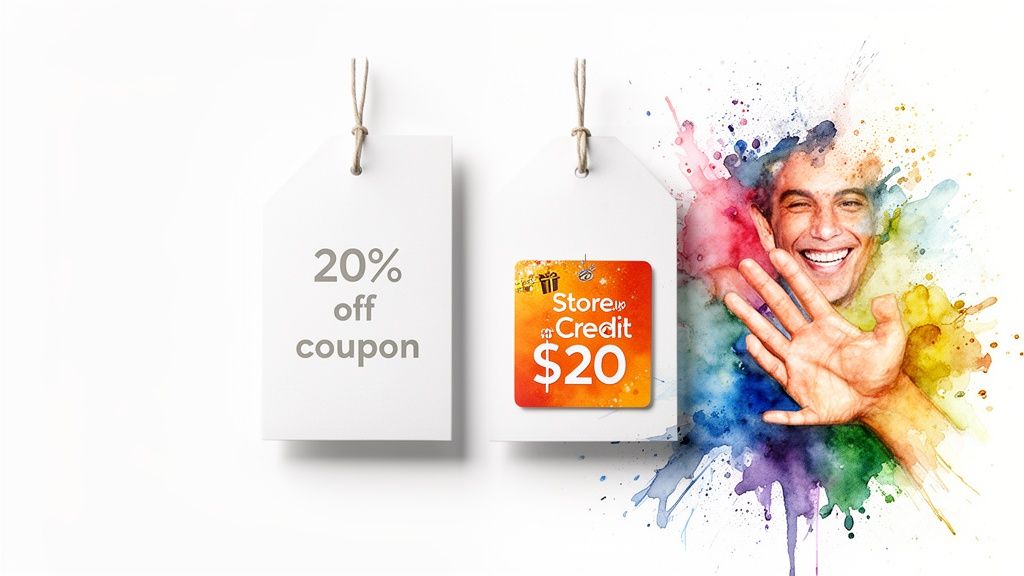
Let's be honest with ourselves for a second: what’s the real cost of all those discounts? Every "20% OFF" coupon you blast out is a straight-up hit to your profit margin. It’s a race to the bottom that trains customers to wait for the next sale, devaluing your products and attracting one-time bargain hunters, not the loyal, high-LTV fans who will stick around.
At its core, a smart conversion rate optimization Shopify strategy isn't just about getting more sales—it’s about building a more profitable business. And one of the most powerful levers you can pull is swapping out those margin-killing coupons and confusing point systems for a much smarter incentive: native Shopify store credit.
This one shift can take you from a model that bleeds cash to one that actively boosts your average order value (AOV) and customer lifetime value (LTV).
The Psychology Behind Store Credit
So why is native Shopify store credit so much more effective than a simple discount code or a confusing points system? It all boils down to psychology. A discount is a reduction. It frames the transaction around what the customer is saving, keeping their focus squarely on price.
Store credit, on the other hand, is an asset. It's something the customer has earned, which makes it feel like real, spendable cash in their pocket—a reward for their loyalty.
Just think about the difference in how these feel:
20% Off: An abstract percentage. It’s a marketing gimmick that attracts deal-seekers and diminishes your brand's perceived value.
$20 in Store Credit: A concrete dollar amount. It feels like money they already own, creating a tangible reason to come back and spend it, boosting their lifetime value.
This simple reframing from "saving" to "earning" is a total game-changer. It turns a transactional purchase into a rewarding experience, building a much deeper connection with your brand.
Store credit turns a one-time purchase into the beginning of a relationship. By offering a cash-like incentive that customers earn, you create a powerful pull that brings them back for a second purchase, boosting LTV without sacrificing your margins on the first sale.
How Store Credit Increases Average Order Value
One of the most immediate wins you'll see from a store credit system is its impact on AOV. By setting up a simple spend-based rewards program, you can nudge customers to add just a little more to their cart to unlock a reward.
This is where a native Shopify solution like Redeemly really shines. Instead of using clunky third-party widgets that slow down your site and create a disjointed experience, a native app integrates seamlessly with Shopify's own store credit functionality. This allows you to display dynamic messages right on your product and cart pages where it matters most.
Picture this: a customer is about to buy a $75 item. With a spend-and-earn rule in place (like "Spend $100, earn $15 in store credit"), a message appears: "You’re only $25 away from earning $15 in credit!"
This simple prompt completely changes the game. The customer isn't just buying a product anymore; they're on a mission to unlock a reward. More often than not, they’ll find another item to add, pushing their order value past the threshold and instantly increasing your AOV. It works because it aligns your goal (higher AOV) with their desire to get more value.
Why Native Shopify Solutions Win
Using a native Shopify app for store credit gives you a huge leg up over those complex, bloated loyalty platforms or abstract point systems. Frankly, those other solutions often create new problems that hurt your conversion efforts.
Performance Drag: Heavy JavaScript widgets from external platforms are notorious for slowing down your site—a known conversion killer. A native app like Redeemly is built on Shopify's own infrastructure, keeping your store fast and lightweight.
Customer Confusion: Point systems ("earn 10 points for every dollar!") are abstract and confusing. Customers often have to log into a separate portal just to figure out what their balance is worth. Native store credit is simple: they see a real dollar amount and can spend it right at checkout.
Brand Devaluation: Constant pop-ups and flashy loyalty widgets can make your site feel cluttered and cheap. A native solution offers a clean, integrated experience that feels like a premium, built-in feature of your store.
By using Shopify's built-in store credit functionality, you give customers a seamless experience they immediately understand and value. That simplicity is the key to getting them to actually use the program and deliver on its promise of higher AOV and LTV.
The path to sustainable growth isn't paved with discounts. It’s built on creating real, long-term value for your customers. Making the switch to a margin-friendly store credit model is how you start optimizing for what truly matters: profitable, lasting customer relationships.
Build A Retention Engine That Boosts LTV
Look, getting that first sale is a great start, but the real money in ecommerce isn't made on the first transaction. The most profitable Shopify brands I’ve worked with aren't just hunting for new customers; they're masters at turning one-time buyers into a reliable, recurring revenue stream. This is the essence of maximizing Customer Lifetime Value (LTV).
This is where your native Shopify store credit strategy really starts to shine. It's more than just a trick to bump up AOV. When used correctly, it becomes a powerful engine for retention. The whole idea is to create a self-perpetuating cycle of repeat business, all driven by value your customers have already earned. This builds powerful buying habits without the need for confusing point systems or gimmicky loyalty tiers.
The Magnetic Pull of Earned Credit
Think about it. A discount code is a fleeting offer. Use it or lose it. But store credit? That’s a real asset. It sits in a customer's account, a constant, tangible reminder of the value they got from shopping with you. This creates a psychological pull that a simple "10% off" code just can't replicate.
When someone earns credit, they literally have "money on the table." It fundamentally changes their relationship with your brand. They’re no longer just a person who bought something once; they're an invested stakeholder with a very real reason to come back. You've given them a sense of ownership, and that’s the bedrock of genuine, long-term loyalty that drives up LTV.
Earning credit flips a switch in the customer's mind. They stop thinking about their last purchase and start anticipating their next one. That built-in incentive is your single best tool for driving repeat business and boosting LTV.
Automating the Retention Loop
The beautiful thing about a native store credit system is its simplicity. You can automate the entire retention loop, creating a hands-off, self-sustaining cycle of customer engagement. It’s a straightforward and incredibly effective process for increasing LTV:
Shop & Earn: A customer buys something, hits a spending goal you set, and boom—they automatically get store credit.
Get Reminded: You set up automated emails and texts to let them know about their balance. This isn't just another marketing blast; it's a helpful heads-up about their money.
Return & Redeem: The customer comes back, applies their credit at checkout, and makes another purchase. The best part? They often earn more credit in the process, starting the cycle all over again.
This seamless loop turns what might have been a one-and-done transaction into an ongoing relationship. To really nail this, you need to dig into the right strategies. It's worth exploring the different ways to how to increase customer lifetime value to build a much healthier business overall.
Turning Credit Balances Into High-Converting Campaigns
Here’s a tactic I’ve seen work wonders: create a "warm audience" segment based entirely on who has store credit. Just sync your customer data with your email platform (like Klaviyo) and build a list of everyone with an available balance.
This is, without a doubt, your highest-intent audience for boosting LTV. They’ve already bought from you, they trust you, and they have a financial incentive sitting there, waiting to be used. Sending targeted campaigns to this group is like shooting fish in a barrel.
We've seen data showing that loyalty programs tied into CRO can dramatically lift LTV. For Shopify stores, email campaigns sent to these warm audiences—primed with store credit rewards—can hit conversion rates anywhere from 2.6% to 10.3%. That’s a number that should make any retention manager’s ears perk up. It proves that margin-friendly incentives are a direct path to predictable revenue. You can find more Shopify conversion rate statistics on yotpo.com to back this up.
Try a few of these simple, high-impact campaigns:
"Your Credit is Waiting" Nudges: A simple, non-salesy email just stating their current balance.
New Product Alerts: "Use your $15 credit toward our new arrivals!"
Exclusive Early Access: "Shop the new collection 24 hours early and use your credit."
These messages feel less like marketing and more like a personal VIP service, which only strengthens the customer bond. If you need more inspiration for keeping customers hooked, our guide on retention marketing strategies is packed with tactics you can use right away.
By shifting your focus beyond one-off sales and building this automated retention loop, you transform your CRO efforts into a sustainable growth machine. You'll reduce your reliance on expensive new customer acquisition and build a rock-solid foundation of loyal, high-value customers who will power your business for years to come.
Putting Your CRO Strategy into Action (And Measuring What Matters)
A brilliant strategy is useless without execution. You get the 'why' behind using margin-friendly store credit, so let's dive into the 'how'. This is where we bring your new conversion rate optimization Shopify playbook to life with a clear roadmap for launching—and just as crucially, measuring what truly matters for AOV and LTV.
The secret to a successful launch? Keep it simple. Forget about wrestling with complex integrations or confusing point systems. A tool like Redeemly, built directly on Shopify’s native infrastructure, offers a lightning-fast, no-code installation from the Shopify App Store. This means you can get your spend-and-earn rewards program up and running in minutes, not weeks, without bogging down your site speed.
Setting Up Your Store Credit Program
Once you’re in, the first move is to define your reward rules. This is the heart of your strategy, and it’s what will directly influence your AOV. I’ve found that a great starting point is to set a spend threshold that’s about 15-20% higher than your current average order value.
For example, if your store’s AOV is currently $85, a compelling offer would be:
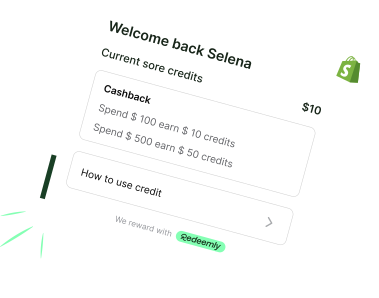
Spend $100, get $10 in store credit.
This creates a clear, achievable goal for shoppers. It nudges them to add just one more item to their cart to unlock that reward. The best part is the on-site messaging—like progress bars and cart notifications—appears automatically, doing all the persuasive work for you to lift AOV.
A Framework For A/B Testing Your Rewards
Don't just set your rewards and forget them. The most successful brands I've worked with are always testing and refining their offers to squeeze every drop of value out of them. Your goal is to find that perfect sweet spot that boosts AOV and LTV without eating into your margins.
Here are a few key variables I always recommend A/B testing:
Reward Thresholds: Is "Spend $100, get $10" more effective than "Spend $120, get $15"? Run tests with different tiers to see which one gives you the biggest lift in AOV.
On-Site Messaging: Play around with the copy in your on-site notifications. Does "You're $15 away from a $10 reward!" convert better than a simpler "Add $15 more to earn $10"?
Reward Type: While store credit is an incredibly powerful default, you could also test offering a free product as a reward for hitting a spend goal. See how it changes customer behavior and impacts LTV.
To get the most out of your efforts, a solid grasp of targeted tactics is crucial. This guide on Shopify Conversion Rate Optimization provides some excellent, actionable strategies to boost your store's performance.
Tracking The Metrics That Actually Drive Profit
Obsessing over your overall conversion rate is a classic rookie mistake. A successful store credit program is measured by its impact on profitability and loyalty, not just getting that first sale across the line.
Your north star metrics have to shift. Instead of fixating only on the conversion rate, you need to monitor the numbers that show you're building a healthier, more profitable business with higher lifetime value.
Start tracking these KPIs from day one using your Shopify Analytics and your app's dashboard:
Average Order Value (AOV): Is it climbing as customers stretch to hit those reward thresholds? This is your most immediate sign that the strategy is working.
Add-to-Cart Rate: Are your on-site messages actually encouraging more people to start building a cart?
Repeat Purchase Rate: How many customers who earn credit are coming back to spend it? This is the true test of your retention engine's impact on LTV.
Customer Lifetime Value (LTV): Over time, are your customers spending more with your brand? This is the ultimate measure of long-term, sustainable success.
This visual perfectly illustrates the simple, powerful retention loop you're building. Customers shop, earn credit, and are naturally drawn back to your store to use it.
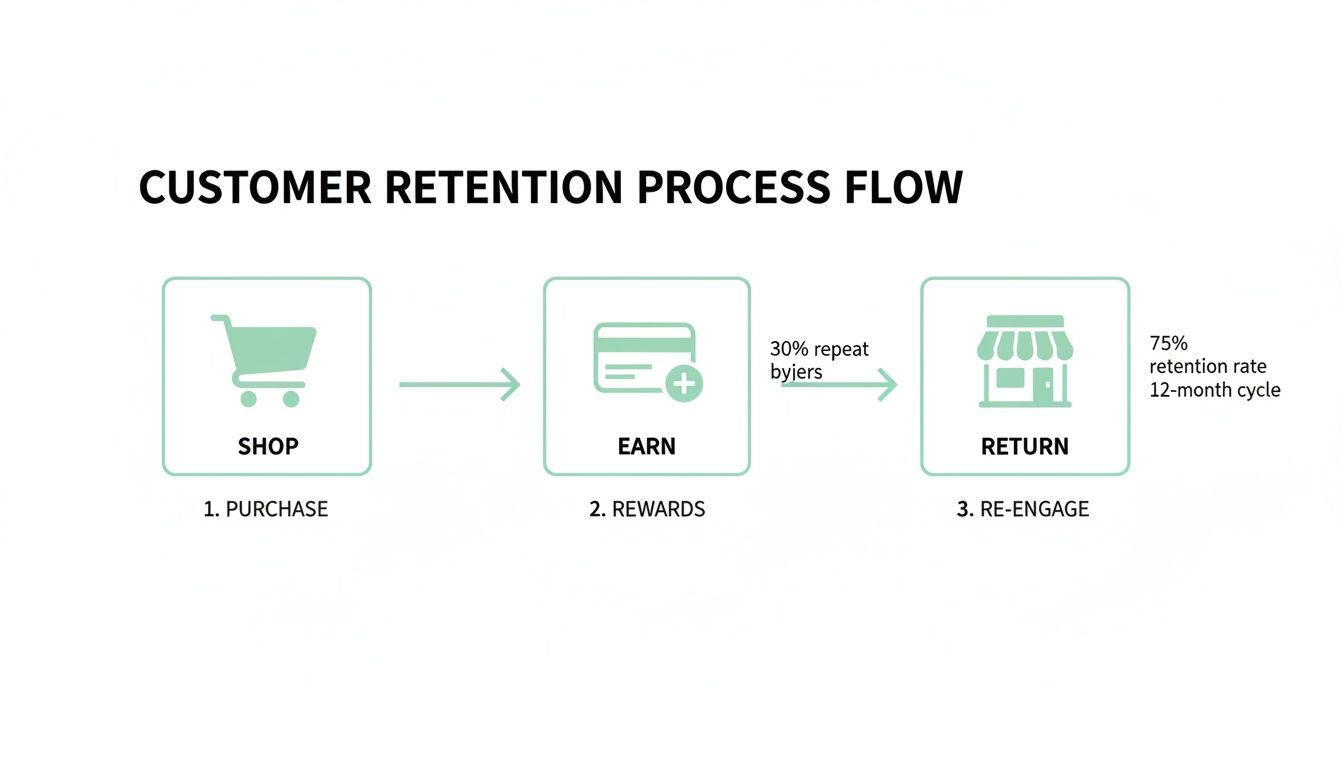
By automating this cycle, you start transforming one-time buyers into a predictable source of recurring revenue. This holistic approach ensures your CRO efforts aren't just driving clicks—they're building a fundamentally more profitable business from the ground up.
Got Questions About Shopify CRO and Store Credit?
Jumping into a new conversion rate optimization Shopify strategy always brings up a few practical questions. I get it. Moving away from the familiar world of discounts to a store credit model feels like a big shift. But it’s a shift rooted in building a much more profitable, sustainable business by focusing on average order value and lifetime value.
Here are some of the most common questions I hear from merchants making this exact change.
Will I Lose Sales If I Stop Offering Discounts?
This is the number one concern, and it's a fair one. But it frames the goal a little backwards. Sure, a big 40% off sale can give you a quick sales bump, but at what cost? You're killing your margins and mostly attracting one-and-done bargain hunters who will never buy from you again at full price.
Switching to native store credit is a conscious decision to step off that low-margin treadmill.
You might see a slight change in buying patterns at first, but that’s the point. The strategy is built to immediately lift your Average Order Value (AOV) because shoppers will add more to their cart to hit that reward threshold. The real magic happens when that earned credit brings them back for a second purchase, which is how you dramatically boost your Repeat Purchase Rate and long-term Customer Lifetime Value (LTV).
Is This Going to Be a Technical Nightmare to Set Up?
Not even close. One of the best things about using a native Shopify solution like Redeemly is how ridiculously simple it is. It's built right on top of Shopify’s own store credit system, which means you avoid all the usual headaches of confusing point systems.
There are:
No clunky external scripts to slow your site down.
No complicated integrations to break.
Absolutely zero coding required.
The whole point is to make it a one-click install from the Shopify App Store. You can literally get it running in minutes. Just set your rules—like "Spend $100, get $10 in credit"—and you’re live. It just works.
How Do I Know If a Store Credit Program is Actually Working?
Success here isn't just about a single conversion rate metric. It’s about building a fundamentally healthier business. Your focus needs to shift from just top-line revenue to profitability and loyalty.
These are the KPIs you should be watching like a hawk to measure the impact on AOV and LTV:
Average Order Value (AOV): Are people spending more to earn rewards? This is your first and fastest signal that the strategy is working.
Repeat Purchase Rate: Is the credit actually bringing customers back? This is the core of your new retention engine.
Customer Lifetime Value (LTV): Is the total worth of each customer going up over time? This is the ultimate report card for your brand's long-term health.
Profit Margin Protection: Just compare your margins now versus when you were deep in the discount cycle. The difference should be night and day.
Ready to stop bleeding profit on discounts and start building real, profitable loyalty? Redeemly helps you build that retention engine using Shopify’s own native store credit.


Join 7000+ brands using our apps