A Customer Retention Program That Actually Boosts LTV
Feb 2, 2026
|
Published
A great customer retention program should be a profit engine, not a cost center. But for too many Shopify stores, these programs are actually leaking money through margin-crushing discounts and confusing point systems that just don't build real, lasting loyalty that increases Customer Lifetime Value (LTV).
Why Your Customer Retention Program Is Leaking Profit
Does this sound familiar? You’ve poured time and money into a customer loyalty program, but it feels more like you’re renting customers than earning their loyalty. Your sign-up numbers look great on paper, but you aren’t seeing a real bump in repeat purchases or, more importantly, a higher average order value and customer lifetime value. If that hits close to home, you’re not alone. The old playbook is broken.
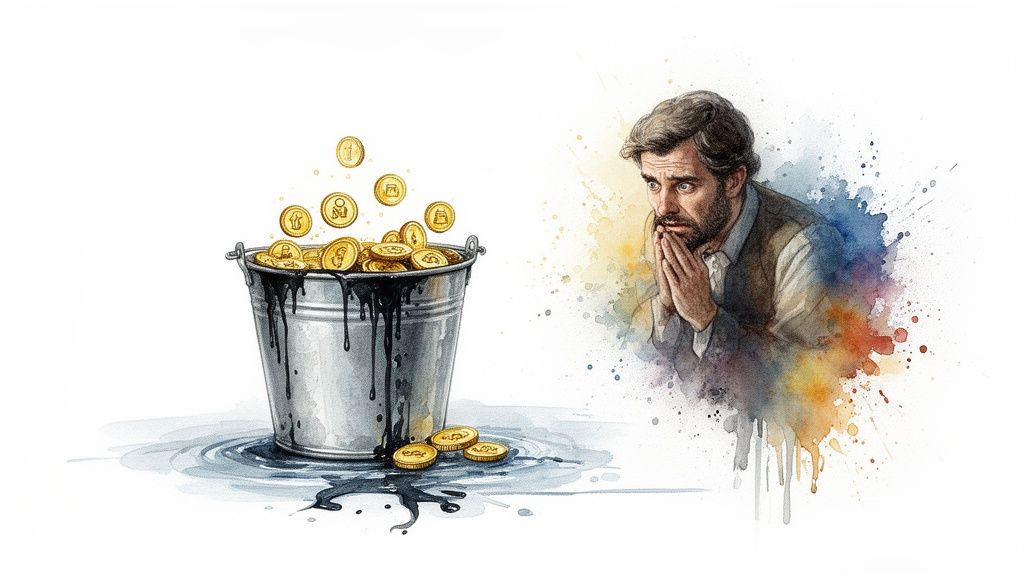
Think of your business as a bucket you're trying to fill with profit. Every new customer is more water poured in. But if the bucket has holes—customers who buy once and never come back—you’re constantly losing what you put in. Pouring faster doesn't fix the leak. That's the reality for countless stores. Their retention strategy is a leaky bucket, and the holes are caused by outdated reward tactics like discounts and points.
The Illusion of Points and Discounts
For years, loyalty programs have been built on two main pillars: discount coupons and point systems. While they might drive a quick sale, they rarely forge the deep connection that creates a truly loyal fan who contributes to long-term growth.
Discounts, for instance, just train customers to wait for a sale. This devalues your brand and eats directly into your profit margins with every transaction, lowering your average order value. Points systems are often even worse. They’re clunky and confusing, forcing shoppers to do mental math just to figure out what their points are actually worth. This friction creates a major disconnect between the action (making a purchase) and the reward.
That disconnect is a critical failure. A customer retention program should make a shopper feel valued and excited to return, not confused about abstract points or conditioned to only buy during a sale.
The data tells the same story. Loyalty programs are everywhere, but actual loyalty is on the decline. According to a 2025 EY Loyalty Market Study, while nearly 92% of consumers are enrolled in at least one program, genuine, trust-based loyalty has plummeted to just 29%. It’s proof that high enrollment doesn't automatically lead to high engagement or, more importantly, profitability.
Shifting Focus to Real Value
The fundamental problem is that these old methods fail to move the needle on the metrics that truly matter: Customer Lifetime Value (LTV) and Average Order Value (AOV). A 10% off coupon might lock in one sale, but it does very little to encourage a second, third, or fourth purchase at full price.
To build a program that doesn't bleed profit, you need to think differently. The most effective approach for Shopify stores is leveraging native store credit. There are some fantastic customer retention tips out there that can help reframe your strategy around this powerful tool.
The goal isn't just to get another transaction; it's to build a sustainable cycle of repeat business that grows your store profitably. This requires a fresh approach—one that delivers tangible, immediate value without sacrificing your margins. It’s time to fix that leaky bucket for good.
The Engine of Modern Retention: Native Shopify Store Credit
Imagine giving your best customers something that feels just like cash in their pocket—an immediate, tangible reason to come back and shop again. This isn't about collecting abstract points or chasing a fleeting discount code. This is the power of a customer retention program built on Shopify's native store credit system, the modern engine for forging profitable, long-term relationships that maximize LTV.
Unlike confusing point systems or discounts that just train shoppers to wait for a sale, native store credit offers clear, spendable value. It fundamentally changes the customer's mindset from, "How can I save money?" to, "What can I buy with the money I already have here?" That simple shift is the key to unlocking the two most critical metrics for any Shopify store: Average Order Value and Customer Lifetime Value.
The Instant Boost to Average Order Value
One of the most immediate effects of a great store credit program is its impact on your Average Order Value (AOV). The moment a customer knows that spending just a little bit more will unlock a valuable reward, their entire approach to shopping changes. A simple reward structure like, "Spend $100, get $10 in store credit," naturally nudges them to add one more item to their cart to hit that goal.
Think about it: this strategy is worlds away from a simple discount. Instead of slashing the value of the current sale, you're encouraging a bigger purchase with the promise of future value. The customer feels smart for earning a reward, and you see a healthier, higher AOV on the spot. It’s a true win-win that drives growth without wrecking your margins.
Building Lasting Customer Lifetime Value
But the real magic happens after that first purchase. The store credit a customer earns acts like a powerful magnet, pulling them right back to your store. This is where you start to see a serious increase in Customer Lifetime Value (LTV)—the total amount of money a single person spends with you over time.
Store credit transforms a one-time buyer into a repeat customer by creating a built-in reason to return. It’s not just a reward; it’s a commitment to a future purchase, turning the traditional one-off transaction into a continuous, profitable loyalty loop that grows LTV.
This cycle is absolutely crucial for sustainable growth. We all know the stats: acquiring a new customer can cost five to seven times more than keeping an existing one. A native Shopify store credit program tackles this head-on by turning your current customers into your most valuable asset. Each credit-fueled purchase strengthens their bond with your brand, making them far less likely to wander off to a competitor.
The Power of Native Shopify Integration
And the best part? This entire process can be completely seamless for both you and your customers. Modern tools are built directly on Shopify’s own store credit system. That means no clunky setups, no heavy scripts bogging down your site, and no confusing third-party widgets that interrupt the checkout flow.
A native integration ensures the store credit is always visible, easy to understand, and dead simple to apply. Customers see their balance grow and feel a real sense of progress, keeping your brand front and center in their minds. To get a deeper look at the mechanics, you can learn more about what store credit is and why it's so powerful. By making the reward feel like a natural part of the Shopify experience, you remove any friction and maximize the program's impact, driving both AOV and LTV with every single sale.
Building Your High-Impact Store Credit Program
So, you're ready to build a retention program that actually works? The good news is, moving from the idea of store credit to a live, profit-driving program using Shopify's native functionality is much simpler than you might think. It all starts with setting clear goals that go beyond vanity metrics—like sign-ups—and focus squarely on what moves the needle for your business.
A great retention program isn't about giving things away for free. Think of it as a strategic investment in your two most important growth levers: Average Order Value (AOV) and Customer Lifetime Value (LTV). The blueprint for a program that delivers real results is built on a foundation of clear business goals, rewards that people actually want, and an experience so smooth they don't even have to think about it.
First Things First: Define Your Business Goals
Before you even think about what rewards to offer, you need to define what success looks like. Your goal isn't just to "launch a program"; it's to hit a specific business target. Are you trying to get more first-time buyers to come back for a second purchase? Or maybe you want to bump up your AOV by 15% this quarter?
Set specific, measurable targets you can track. For example:
Boost Repeat Purchase Rate: Aim to lift the percentage of customers who return for a second purchase from 20% to 30% within six months.
Elevate Average Order Value: Nudge customers to spend more each time they shop by setting a goal to increase AOV by $20.
Grow Customer Lifetime Value: Play the long game by focusing on increasing the total amount an average customer spends with you over their entire relationship with your brand.
When you start with concrete goals like these, every decision you make—from the reward structure to the launch email—becomes purposeful. This is the difference between a program that feels nice and one that genuinely grows LTV and AOV.
Structure Rewards That Are Compelling and Profitable
The heart of any retention program is the reward itself. This is where native store credit truly outshines confusing point systems and margin-killing discounts. It's simple, direct, and everyone understands what it means. One of the most effective models is the classic "spend-and-get" approach.
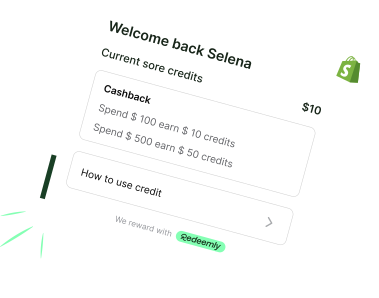
A structure like "Spend $100, Get $10 in store credit" is a powerhouse for a few reasons. It sets a clear spending target that encourages customers to add just one more item to their cart, directly increasing your AOV. At the same time, the reward feels substantial and acts as a guaranteed reason to come back, fueling your repeat purchase rate and ultimately your LTV.
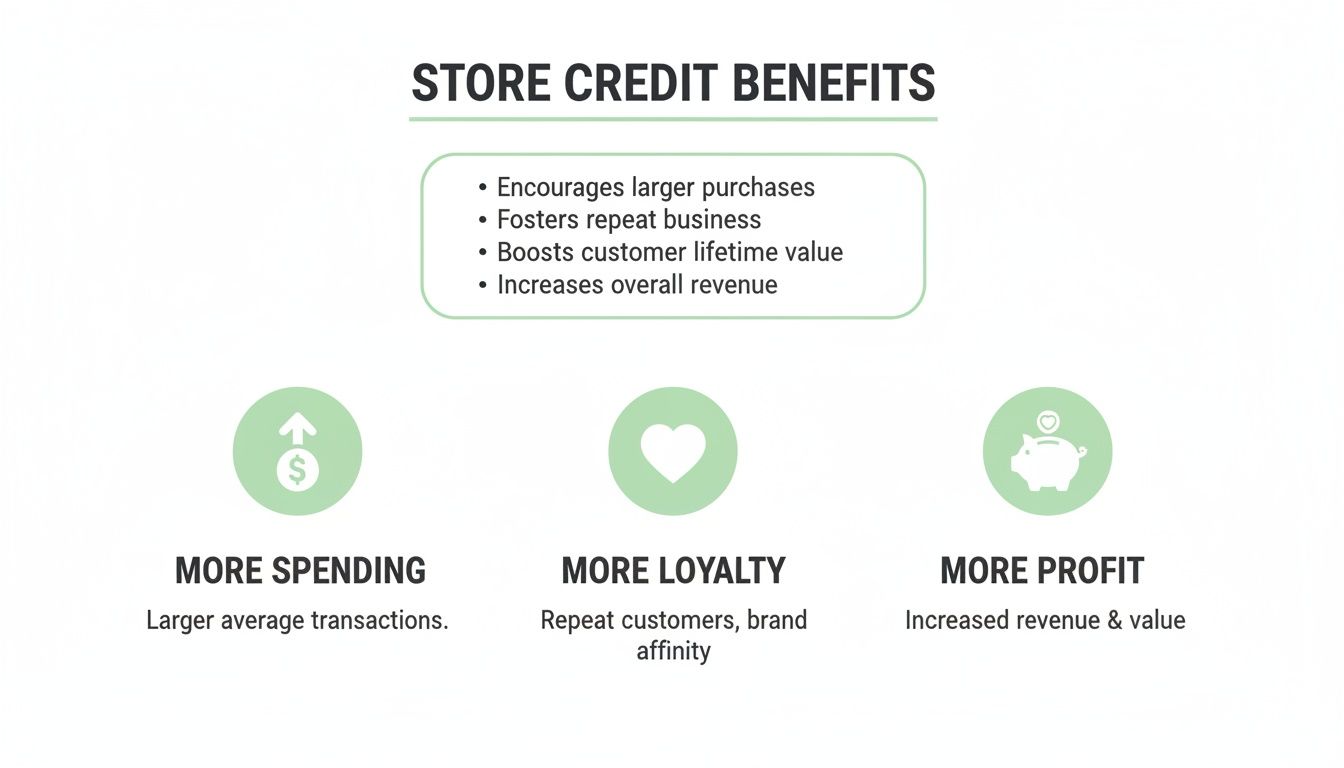
As you can see, this creates a beautiful feedback loop: higher AOV leads to stronger loyalty and more repeat purchases, which in turn drives a higher LTV for your store. It’s a win-win.
Numbers from across the industry back this up. Research shows that 72% of loyalty program members are more likely to stick with a brand, and 59% of sales leaders call these programs their number-one tool for keeping customers long-term. Just look at giants like Costco, where top-tier members drive over 73% of global sales, or Starbucks, where rewards members now account for a staggering 60% of all revenue.
To help you decide on the right incentive, let's break down the most common reward types.
Store Credit Rewards vs. Points vs. Discounts
Choosing your reward mechanic is a critical step. While discounts can drive a quick sale, they often train customers to wait for the next price drop. Points can be effective but often feel abstract and slow to accumulate. Native Shopify store credit, on the other hand, strikes the perfect balance between immediate value and long-term loyalty.
Here’s a head-to-head comparison:
Feature | Native Store Credit | Points Programs | Discount Codes |
|---|---|---|---|
Perceived Value | High & immediate. Feels like cash for your store. | Moderate. Value is often abstract until a threshold is met. | Varies. Can devalue the brand if overused. |
Impact on AOV | High. Encourages customers to spend more to earn credit. | Moderate. Earning can feel slow and disconnected from the purchase. | Low. Often used to spend less, not more. |
Customer Behavior | Drives repeat purchases and builds long-term LTV. | Encourages long-term engagement but can be slow to motivate. | Encourages one-off transactions and bargain hunting. |
Profit Margin | Protects margins, as credit is spent on full-price items. | Protects margins, but reward redemption can be complex. | Directly erodes margins on every transaction. |
User Experience | Simple & intuitive. Seamless within the Shopify ecosystem. | Can be confusing. Customers have to track points and tiers. | Easy to use, but codes can get lost or shared. |
Ultimately, native store credit offers a more sustainable path to growth. It keeps customers locked into your ecosystem, protects your profit margins, and provides a clear, tangible benefit that grows your AOV and LTV.
Create a Frictionless User Experience
Even the most generous rewards will fall flat if the experience is clunky. This is where using a native Shopify app really pays off—the integration is seamless. To get people excited and engaged, their store credit balance needs to be visible, accessible, and always top-of-mind.
Your store credit should feel like a digital wallet that follows the customer around your site—always present but never intrusive. This constant visibility reminds them of the value they have waiting, turning a passive reward into an active shopping motivator.
A floating wallet icon or a clear balance display in the account section prevents the reward from being forgotten. When a customer sees they have "$10 available," it creates a powerful psychological pull to use it. The checkout should be just as easy, letting them apply their credit with a single click.
Don't Be Shy—Communicate the Value
Finally, a brilliant program needs brilliant communication. Don't build it and hope they'll come. You have to tell them! Promote your new native store credit program across every channel you have.
Get the word out with a simple, coordinated launch:
Launch Email Campaign: Announce the program to your entire email list. Keep it simple, explain the benefits, and tell them how to start earning.
On-Site Banners and Pop-Ups: Use eye-catching banners on your homepage and product pages to let visitors know there's a new way to get rewarded.
Post-Purchase Notifications: After a customer makes a purchase, send an automated email celebrating the credit they just earned. This immediately encourages them to start thinking about their next visit.
By tying together clear goals, smart rewards, a seamless experience, and proactive communication, you’ll build a high-impact retention program that does more than just make customers happy—it creates a sustainable engine for profitable growth.
How Store Credit Creates A Win-Win For You And Your Customers
A truly great customer retention program isn’t just good for business—it creates a cycle of value where your customers feel genuinely appreciated. The best strategies are built on a simple premise: a win-win exchange. When you stop slashing your margins with constant discounts and pivot to a native Shopify store credit system, you build a powerful dynamic that rewards everyone involved.

For your customers, the appeal is instant and crystal clear. There’s no need to pull out a calculator to figure out what their rewards are actually worth. No confusing conversion rates or tiers to keep track of. Store credit is just like cash in their pocket, ready to spend at your store. This simplicity builds trust and makes the reward feel real, transforming a complex loyalty scheme into a satisfying, straightforward perk.
Protecting Profits While Fueling Growth
While your customers are enjoying that simplicity, your business is reaping even bigger rewards on the back end. Unlike a discount that immediately cuts into your revenue and devalues your product, native store credit protects your profit margins in a much smarter way. The credit you issue only becomes a "cost" when a customer returns to make another purchase, often at full price.
Think of it this way: a 20% off coupon is a guaranteed 20% loss on that transaction’s margin. But a $20 store credit reward? That's an investment that requires the customer to come back and spend more money with you to redeem it. This one change completely flips the financial equation. You're incentivizing a future, profitable sale instead of sacrificing the profitability of the current one.
This shift—from discounting current purchases to funding future ones—is the secret to a sustainable growth cycle. It moves your retention strategy from a cost center to a profit driver that boosts both AOV and LTV.
This approach gives you a much more predictable and financially sound future. Instead of chasing short-term sales with promotions that eat away at your bottom line, you’re building a loyal customer base that's financially motivated to stick around.
The Impact On Lifetime Value and Order Value
This is where the win-win model really proves its worth. By rewarding customers with spendable credit, you are actively encouraging the very behaviors that boost your most important metrics.
Higher Average Order Value (AOV): Picture this: a customer sees they can earn a $15 credit by spending just $10 more. They’re far more likely to add another item to their cart to hit that threshold. Just like that, you’ve increased the value of their current transaction without giving a single thing away upfront.
Greater Customer Lifetime Value (LTV): That store credit sitting in their account acts like a powerful magnet, pulling them back for their next purchase. This simple mechanic is how you turn one-time buyers into repeat customers, dramatically increasing the total revenue you generate from each person over time.
The data backs this up. Returning customers are your most valuable asset, hands down. Not only are they far cheaper to keep than acquiring new ones, but they also spend more. In fact, repeat customers spend 67% more on average than new customers. A store credit program directly feeds this behavior, creating a reliable engine for long-term growth by increasing LTV.
Ultimately, by ditching confusing points and damaging discounts, a customer retention program built on native Shopify store credit creates a perfectly balanced ecosystem. Customers get clear, tangible value they actually love, and you get a profitable, predictable, and sustainable way to grow your business.
Measuring The Metrics That Actually Matter
A great store credit program feels like it's working, but feelings don't pay the bills. How do you prove it’s actually boosting your LTV and AOV? If you can't measure it, you can't improve it.
To see the real ROI, you have to slice through the vanity metrics and focus on the numbers that truly matter. It's time to move past surface-level stats like program sign-ups and get to the financial heartbeat of your business. Let's look at the core KPIs that show the true impact of your native Shopify store credit strategy.
Customer Lifetime Value (LTV)
This is the big one. Customer Lifetime Value (LTV) is the total profit you'll make from a single customer over their entire time with your brand. Think of it as the ultimate report card for your store's long-term health and customer loyalty. A successful customer retention program is defined by its ability to increase this number.
A native store credit program is built to pump up LTV. It creates a powerful, magnetic reason for customers to keep coming back. Each purchase adds to their lifetime value, and the credit they earn is the hook that brings them back for more. In Shopify, you can watch this happen in real-time by analyzing customer cohorts—seeing how groups of customers spend more over time.
When you're trying to figure out if your efforts are paying off, understanding Customer Lifetime Value (CLV) is non-negotiable.
Repeat Purchase Rate
Next up is your Repeat Purchase Rate. This metric is simple but powerful: it’s the percentage of customers who come back for a second purchase. This is your first and clearest signal that you're successfully turning one-time buyers into loyal fans. A rising repeat purchase rate is a direct contributor to higher LTV.
In the brutal world of e-commerce, this is a critical battleground. Data shows the average e-commerce retention rate is just 38%, a tough number for any Shopify store owner.
Consider this: a tiny 2% increase in retention has the same bottom-line impact as slashing your costs by 10%. On top of that, returning customers spend a whopping 67% more than new ones. Even small wins here, driven by your store credit incentives, can completely change your profitability. You can track this right in your Shopify Analytics under the "Returning customer rate" report. If that number is trending up, your focus on LTV is paying off.
Average Order Value (AOV)
While LTV is the long game, Average Order Value (AOV) gives you instant feedback. It tracks the average amount a customer spends every time they check out. A smart store credit program is designed to nudge this number higher, which in turn boosts overall LTV.
For instance, a reward tier like, "Spend $100, get $10 in credit" creates a psychological target. Customers who are close to that $100 mark are incredibly motivated to add just one more item to their cart to unlock the reward. Boom—you’ve just boosted your AOV for that sale.
Think of AOV and LTV as a powerhouse duo. A higher AOV makes every transaction more valuable, and a higher repeat purchase rate makes sure those valuable transactions happen again and again. Together, they supercharge your overall LTV.
Using Cohort Analysis to See the Big Picture
To really grasp the impact of your program, you need to zoom out and use cohort analysis. A cohort is just a group of customers who share a common starting point, like everyone who made their first purchase in June.
By tracking these groups over time, you can paint a crystal-clear picture of your success. Compare the LTV of a cohort acquired after you launched your store credit program to one from before. The data will tell a compelling story, showing exactly how your new program is creating more valuable, more loyal customers who stick around longer and spend more.
This isn't just data—it's the proof you need to show that your strategy isn't just working, it's building a more sustainable and profitable business for the long haul.
Got Questions About Store Credit? We've Got Answers.
Making a change to your retention strategy can feel like a big move, but it doesn't have to be. Shifting to a native Shopify store-credit model is often far simpler—and more profitable—than sticking with the old-school points and discount game. Let's walk through the questions we hear most often from Shopify merchants.
We'll tackle these common hurdles head-on, so you can see just how powerful and easy this switch can be. The goal here isn't just to answer questions, but to show you a smarter path forward, one focused on increasing your Average Order Value and Customer Lifetime Value.
How Is This Different From a Gift Card Program?
This is a fantastic question, and the distinction is crucial. While they both involve Shopify store credit, they serve completely different purposes. A gift card is a one-time product. Someone buys it, it has a set value, and it functions like a prepaid debit card for your store. It's a simple transaction.
An automated store credit program, however, is a living, breathing loyalty engine. You don't buy it; you earn it. It’s a reward automatically triggered by your customers' actions, designed to build a relationship over time.
Think of it this way: a gift card is a one-off purchase. A native store credit program is an ongoing strategy to boost LTV.
The entire point of a loyalty program is to drive key metrics like average order value and lifetime value. It's built to create a "loyalty loop" that keeps customers coming back again and again. A gift card just isn't designed for that.
Is It Complicated to Set Up on My Shopify Store?
Not even close—especially if you choose an app that’s built natively for Shopify. Tools like Redeemly plug directly into Shopify’s own store credit system, which makes the whole process ridiculously simple. There are no clunky scripts to slow down your site or external widgets that need a developer to sort out.
It really is as easy as this:
Install the App: Grab it from the Shopify App Store. A few clicks and you're in.
Set Your Rules: Decide on your rewards, like "Spend $100, get $10 in store credit." This directly targets your AOV.
Make It Yours: Tweak the on-site banners and messages to match your brand's voice and style.
Because it's a native solution, it just works. It syncs with your theme right away, letting you launch a powerful customer retention program in minutes, not days. You can spend your time focusing on how to grow your LTV instead of getting bogged down in technical headaches.
How Do I Migrate From My Old Points System?
Switching from points is a common step, and it's much smoother than you might think. The secret is all in the communication. You want your customers to feel like they’re getting an upgrade, not losing out on their hard-earned points.
Here’s a simple game plan for a seamless transition:
Announce the Upgrade: Kick things off with an email campaign explaining the new, simpler store credit program. Make it clear why this is better for them—no more confusing math, just real dollars they can spend.
Convert the Points: Give everyone a generous window to use up their existing points. For a real win, you could even offer a one-time bonus by converting their leftover points directly into store credit.
Set a Final Date: Announce a clear cutoff for the old system. This creates a little urgency and helps you make a clean break.
The key is to frame this as an improvement. You're moving to a system that’s more transparent and valuable, which shows you respect their loyalty. In the long run, that’s what builds a stronger customer relationship and boosts your lifetime value.
Ready to build a retention program that actually grows your business? It’s time to stop giving away margin with endless discounts and confusing points. Redeemly makes it simple to launch a native Shopify store credit program that increases average order value and drives profitable repeat sales.


Join 7000+ brands using our apps