A Smarter Shopify Loyalty Program: Driving LTV with Native Store Credit
Feb 5, 2026
|
Published
Let’s be honest. Are you still leaning on the same old discount codes and clunky point systems for your Shopify loyalty program? If so, you're not alone. But these traditional models often do more harm than good—they chip away at your profit margins and leave customers feeling more confused than valued. The result? They fail to drive the kind of repeat business that actually grows a brand's lifetime value.
It's time for a new playbook, one that focuses on what truly moves the needle: increasing customer lifetime value (LTV) and average order value (AOV) through the simplicity and power of Shopify native store credit.
Rethinking Your Shopify Loyalty Program Strategy
I've talked to countless Shopify merchants who feel like their loyalty program is just a money pit. And they're usually right. Discount-heavy programs create a race to the bottom, essentially training your best customers to wait for a sale. That’s a direct hit to your bottom line and devalues your brand.
Point systems aren't much better. They often fail to inspire any real action because customers can't easily figure out what they're worth.
Think of loyalty points as a foreign currency. Before your customer can use them, they have to do mental gymnastics, trying to convert points into a real-dollar reward. That friction is a huge barrier. But store credit? That's just like cash in their wallet—simple, clear, and ready to spend.
The Hidden Costs of Old Models
The real problem with these outdated programs is their failure to build genuine, profitable repeat business. They’re often complicated to manage, expensive to run, and they just don't create the sticky customer relationships you need to thrive in a crowded market.
When you rethink your Shopify loyalty program, the goal shouldn't just be transactions. It should be to understand how to build customer loyalty that lasts by fostering deeper connections that go beyond a simple discount. This sets the stage for a much simpler, more profitable alternative: Shopify native store credit.
The infographic below breaks down the three main loyalty models you’ll see on Shopify.
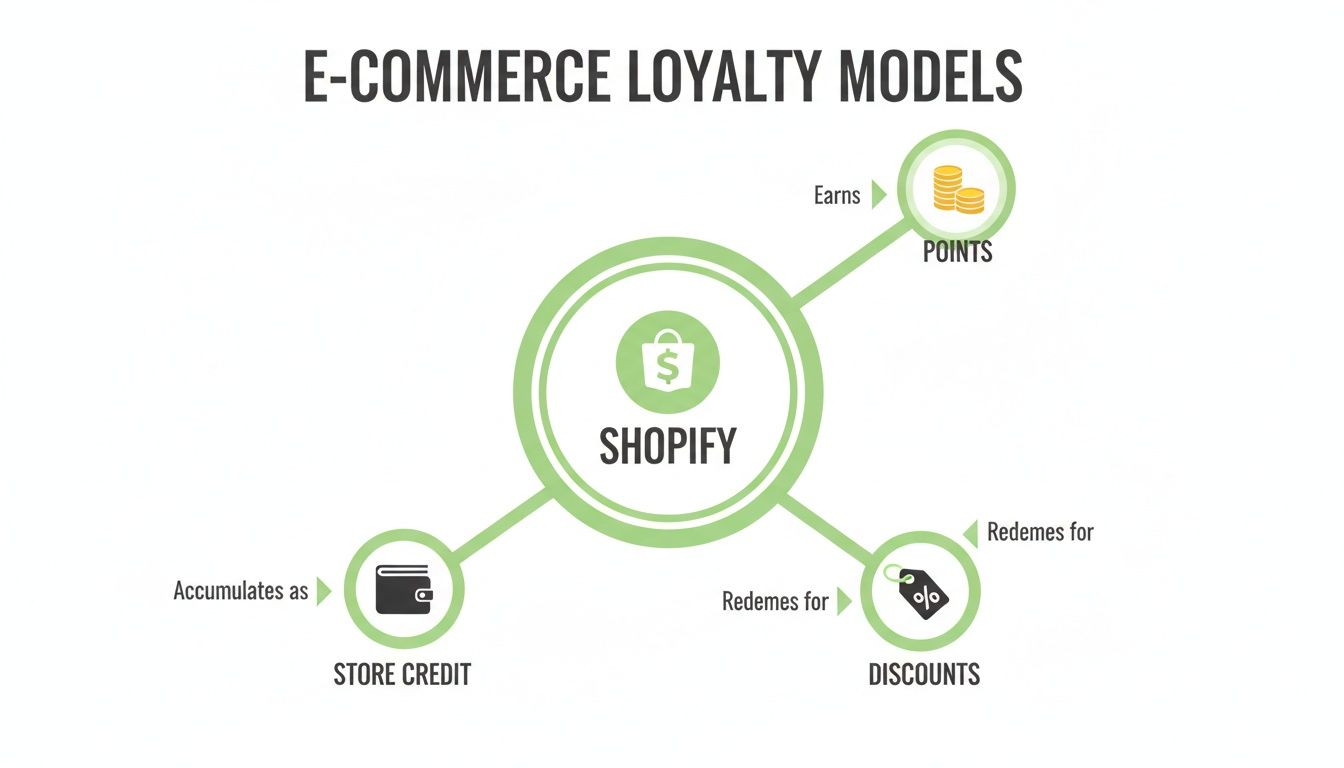
As you can see, store credit offers a much more direct path to delivering value. It cuts through the noise of abstract points and the margin-killing nature of constant discounts.
How Different Loyalty Models Affect Your Bottom Line
A direct comparison of points, discounts, and store credit shows their true impact on key ecommerce metrics like lifetime value and average order value.
Loyalty Model | Impact on Profit Margin | Customer Perception | Effect on AOV & LTV |
|---|---|---|---|
Points | Moderate. Can be controlled but often feels cheapened. | Abstract & confusing. "What are 100 points even worth?" | Indirect. Can be effective, but the friction of redemption limits impact. |
Discounts | High & Negative. Directly erodes margin on every sale. | Transactional. Trains customers to wait for the next sale. | Can increase AOV temporarily, but devalues the brand and hurts LTV. |
Store Credit | Controlled & Positive. Acts like a prepaid balance. | Clear & valuable. "I have $10 to spend." It feels like real money. | Direct. Encourages bigger carts to earn more and guarantees repeat visits. |
The table makes it clear: store credit isn't just another way to offer a reward; it’s a fundamentally different, more business-friendly approach focused on lifetime value.
Focusing on AOV and LTV
The right loyalty strategy should be a profit center, not a cost center. By shifting away from discounts and confusing points toward a native store credit system, you encourage customers to add more to their cart to earn a bigger reward. This directly boosts your Average Order Value (AOV).
That earned credit then becomes a powerful magnet, pulling them back for their next purchase. This kickstarts a retention loop that dramatically elevates Customer Lifetime Value (LTV) over time.
A successful loyalty program isn't about giving things away; it's about creating a compelling reason for customers to choose your brand again and again, turning one-time buyers into a predictable, high-LTV revenue stream.
The data absolutely backs this up. A staggering 83% of consumers say that being part of a loyalty program influences their decision to buy from a brand again. In today's competitive ecommerce world, that's an advantage you can't afford to ignore.
The Power of Shopify Native Store Credit
After seeing where traditional points and discount programs fall short, you're probably asking, "What's a better way?" The answer isn't a slight tweak—it's a fundamental shift in strategy toward Shopify native store credit. This model gets right to the heart of what loyalty should be: a simple, value-driven experience that boosts lifetime value, not a complicated game.
Instead of making customers do mental math to figure out what their points are worth, store credit feels like cash in their digital wallet. That psychological switch is incredibly powerful. A $10 store credit balance isn't a puzzle to solve; it's a tangible reason to come back and buy something else. It feels less like a marketing gimmick and more like a genuine thank-you.
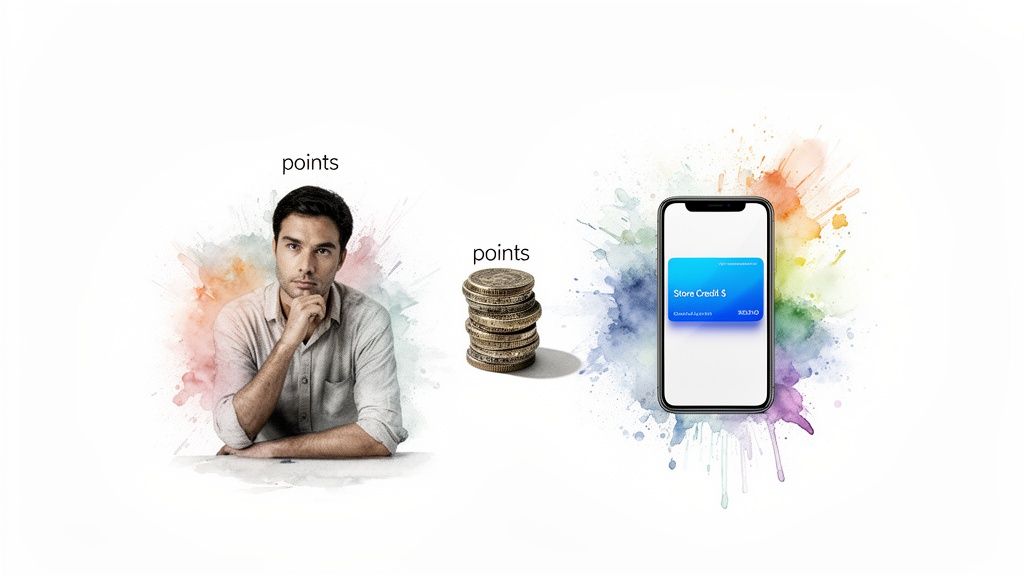
This simple change inherently drives repeat purchases—the very foundation of boosting customer lifetime value (LTV). The credit earned from one order becomes the fuel for the next one, creating a self-sustaining cycle of retention and spending.
Protecting Your Margins and Cash Flow
One of the biggest wins for store credit is how it protects your unit economics. Think about it: upfront discounts immediately slash your profit on a sale. Store credit, on the other hand, only becomes a cost to your business when a customer actually redeems it on a future purchase. This means you're not giving away margin until you've already secured that crucial second purchase, which is a much healthier way to grow.
This is more important than ever as customer acquisition costs keep climbing. For Shopify brands, getting customers to come back on their own isn't a luxury; it's a survival tactic. While loyalty apps like Smile.io are a great starting point, a native store credit program offers a more direct and profitable path to retention.
By going with a native solution, you also sidestep the technical headaches that come with many third-party apps. Heavy external scripts and clunky widgets can slow down your site, hurting the user experience and costing you sales. A native store credit system fits right into the Shopify ecosystem, giving your customers a fast, seamless experience from the homepage all the way to checkout.
Fueling Higher AOV and LTV
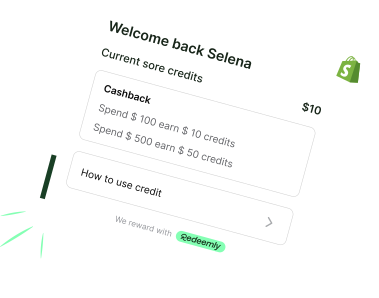
Ultimately, any loyalty program has to increase Average Order Value (AOV) and LTV, or it's not doing its job. A store credit model is built to do both. When you offer credit rewards at specific spending tiers—like "Spend $100, get $10 in credit"—you give customers a clear incentive to add just one more item to their cart. That behavior directly lifts your AOV right then and there.
Store credit transforms loyalty from a transactional discount into a strategic investment in lifetime value. It encourages customers to spend more now and guarantees they have a compelling reason to come back later, building a predictable and profitable revenue stream.
Then, that earned credit becomes your most powerful retention tool. When a customer knows they have a balance waiting for them, your store is the first place they'll think of for their next purchase. This cycle is what turns one-time buyers into loyal, high-LTV fans. For a deeper dive, check out our guide on Shopify native store credit to see how this can completely reshape your retention strategy.
How Store Credit Directly Boosts AOV and LTV
Store credit isn't just another way to say "thank you" to your customers; it's a strategic lever you can pull to directly shape their buying habits. Forget about confusing point systems or discounts that just slash your margins. A smart Shopify native store credit strategy gets right to the heart of your most critical growth metrics: Average Order Value (AOV) and Customer Lifetime Value (LTV).
The whole thing works because it's so simple and effective. When you set up clear "spend-and-earn" thresholds, you give shoppers a real, tangible goal to aim for while they're browsing. This simple shift in framing changes their entire mindset. They're no longer just buying what they came for—they're trying to maximize the value they get back.
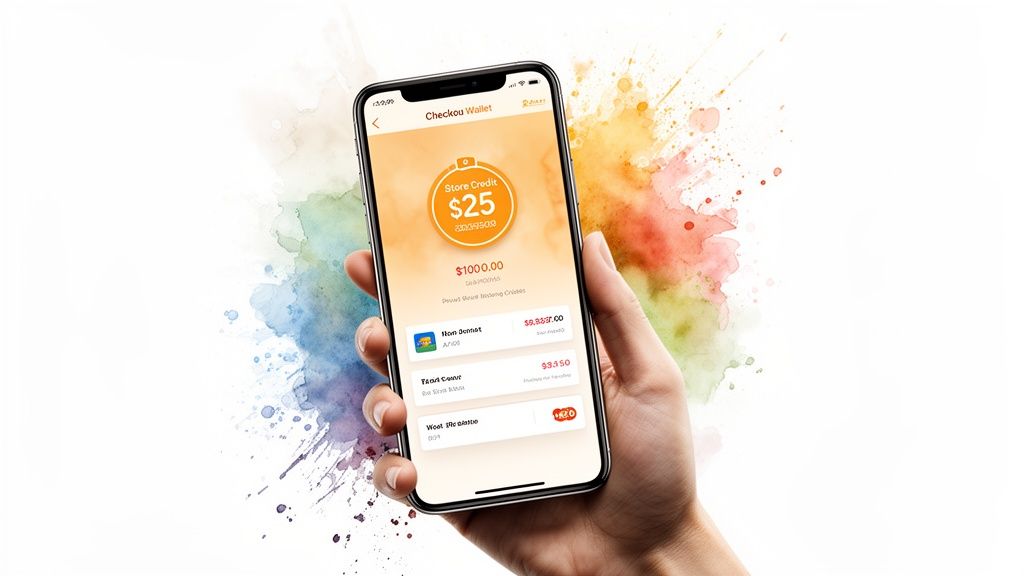
Driving a Higher Average Order Value
Let’s play this out. Picture a customer with $85 worth of items in their cart. They see a notification from your Shopify loyalty program: spend over $100 and get $10 in store credit. All of a sudden, their shopping mission has changed. They're not just buying products anymore; they're investing in their next purchase.
That $15 item they were on the fence about? It’s an easy "yes" now. Adding it to their cart feels like a smart move because they know it unlocks a $10 reward for later. It’s this tiny psychological nudge that lifts your AOV, turning an average sale into a fantastic one. The credit feels like "found money," making the extra spend feel totally justified.
If you're looking to dive deeper into this key metric, we've put together a full guide on how to calculate and improve AOV.
Building a Powerful Retention Loop for LTV
Getting a higher AOV on a single purchase is great, but that's just the beginning. The real power of store credit comes from the retention loop it creates, which is the engine for growing customer lifetime value. The credit a customer earns on their first purchase is a powerful, built-in reason for them to make a second one.
Think of it as a cycle that builds serious LTV over time:
First Purchase: The customer spends a little extra to earn that credit, bumping up your AOV.
Credit Earned: They now have a balance sitting in their account—a little digital IOU that creates a real psychological connection to your brand.
Second Purchase: That credit balance acts like a magnet, pulling them back to your store for another purchase they might have put off or made with a competitor.
Loop Repeats: They earn more credit on that second purchase, which reinforces the habit and solidifies their loyalty.
This strategy is about more than just rewards; it's about engineering repeat business to maximize LTV. By using store credit, you turn one-time buyers into a predictable, long-term revenue stream, creating a healthier and more profitable customer base.
When you build your loyalty program for Shopify around this model, you stop relying on one-off transactional discounts. Instead, you create a sustainable system where every purchase naturally fuels the next, making sure your very best customers have every reason to keep coming back.
Putting Your Store Credit Program Into Action
A great strategy is one thing, but bringing it to life on your store is where the magic happens. A powerful Shopify native store credit program shouldn't feel like a clunky, bolted-on feature. It needs to feel like it’s always been a natural part of your Shopify store. The goal is an experience so smooth customers don't even think about the tech—they just feel the value.
This means ditching the third-party scripts that so often slow down your site and create a jarring experience for shoppers. Instead, look for solutions built directly on Shopify's native Store Credit API. This is key. It ensures your program is stable, fast, and reliable because it’s working with Shopify's core infrastructure, not fighting against it.
When you build on a native foundation, you get a loyalty program that’s not just powerful, but also surprisingly easy to get up and running. Many merchants are able to launch in a matter of minutes, no developers or custom code required.
What a Great Customer Experience Looks Like
For store credit to actually drive retention and boost lifetime value, it has to be front and center. The absolute last thing you want is for customers to earn credit and then completely forget it exists.
Here are the non-negotiables:
An Always-Visible Wallet Balance: Customers need to see their available credit at all times. Whether it’s a floating widget on the screen or a clear display in their account page, this constant reminder is a powerful nudge to come back and shop.
Seamless Theme Integration: Your loyalty program's design—the wallet, the pop-ups, everything—has to blend perfectly with your Shopify theme. If it looks out of place, it feels untrustworthy and cheapens your brand.
One-Click Checkout Redemption: This is the most critical moment. Applying store credit has to be dead simple. Customers should be able to use their balance with a single click at checkout, just like they would a gift card. No friction, no hoops to jump through.
Your loyalty program should make shopping better, not harder. By keeping credit visible and redemption effortless, you tear down every barrier to a repeat purchase and make being a loyal customer feel genuinely rewarding.
Making Loyalty Work Everywhere
The best loyalty programs meet customers wherever they are. While Shopify customer retention rates can be all over the map, programs that bridge the gap between online and in-person shopping consistently see a major lift in repeat business. The top-tier loyalty apps, for instance, integrate with POS systems to create one unified experience for every shopper. You can explore insights on omnichannel loyalty programs to see how brands are pulling this off.
Ultimately, a well-executed program just feels right from start to finish. If you want a deeper dive into the technical side of things, check out our guide on how to issue store credit on Shopify, which walks through the native functions that make this all possible. By focusing on these core elements, you build a system that works for your customers—and your bottom line.
Measuring the Success of Your Loyalty Program
Let’s be honest: a successful loyalty program on Shopify isn't just about giving customers the warm fuzzies. It needs to be a profit center, and you have to be able to prove it. That means moving past vanity metrics and digging into the data that really shows the financial impact on your lifetime value and average order value.
The beauty of a store credit system is how simple it makes this whole process.
Because you're tying rewards directly to spending and redemption, you get a crystal-clear view of how the program is changing customer behavior. You're not just guessing if points are working; you're measuring the tangible return on your investment in keeping customers around. The right numbers will tell you exactly how store credit is beefing up your bottom line.
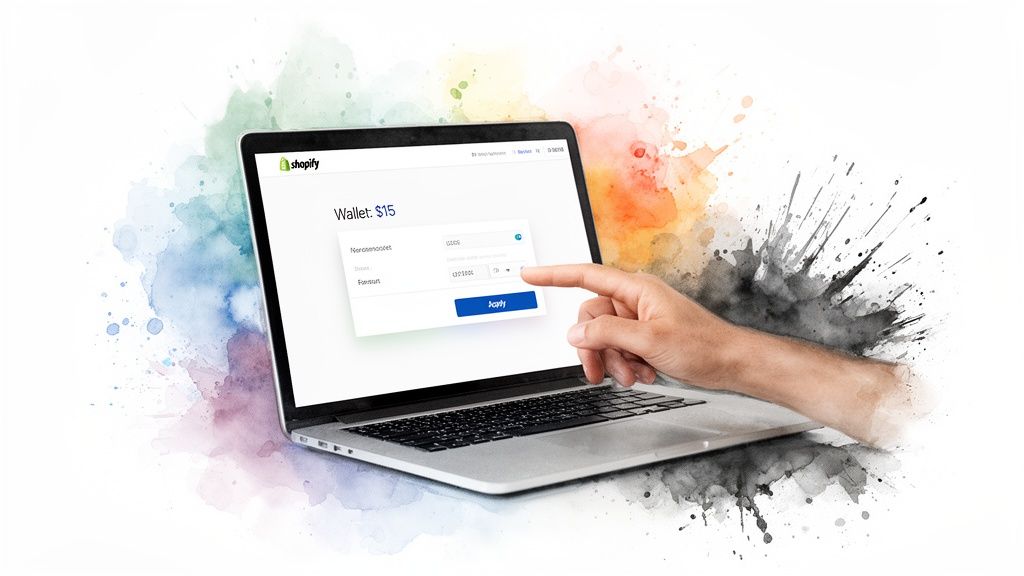
Key Metrics for a Store Credit Program
If you want the real story of your program's performance, you need to zero in on these four metrics. Each one reveals a critical piece of the puzzle, from how people are buying right now to how profitable they'll be for years to come.
Repeat Purchase Rate: This is the ultimate loyalty litmus test. It’s simply the percentage of your customers who come back to buy again (and again). If this number is climbing, it's a direct signal that your store credit is doing its job and pulling people back in.
Average Order Value (AOV): We've talked about how store credit nudges customers to spend a little more to hit that next reward. Tracking your AOV before and after you launch the program will show you precisely how much bigger those carts are getting.
Customer Lifetime Value (LTV): Think of LTV as your north star for retention. It's the total amount of money a customer is expected to spend with you over their entire relationship with your brand. A great store credit program creates a powerful retention loop that should send your LTV soaring.
Credit Redemption Rate: This one’s straightforward—are people actually using the credit they earn? A high redemption rate is a fantastic sign of engagement. It means customers see real value in the program and are actively playing the game.
Proving Your Program's ROI
When you track these metrics, you have everything you need to prove the program is paying for itself. Benchmarks show that 83% of loyalty program owners who actually track ROI see positive returns, especially when they use tiers and rewards that motivate bigger spending and higher LTV. You can discover more insights on loyalty program performance to see how you stack up against the competition.
By focusing on LTV and AOV, you completely change the conversation. It’s no longer, "How much is this program costing us?" Instead, it becomes, "How much revenue is this program generating?" This is how you prove your loyalty strategy is a powerful growth engine, not just another line item on the marketing budget.
Moving On From Points: How to Switch to Store Credit
Thinking about ditching your old points-based loyalty program for Shopify native store credit? It might feel like a huge leap, but it’s one of the smartest upgrades you can make for your business.
The biggest question I hear from merchants is always the same: "What on earth do I do with all my customers' existing points?" The answer is actually pretty simple. It all comes down to communication and framing this change as a massive win for your customers.
Instead of getting bogged down in the technical details of a "migration," think of it as an exciting announcement. Imagine sending an email with the subject line, "Great news! Your loyalty points are now real cash to spend in our store." That one sentence instantly turns abstract, confusing points into real, spendable value. It cuts through the noise and shows them their loyalty is being rewarded in a better, simpler way.
How to Frame the Switch for Your Customers
You need to sell this transition based on the benefits to them. Forget the backend stuff for a moment and put yourself in their shoes.
Your messaging should hammer home these key advantages:
No More Guesswork: Ditch the confusing math. Their reward is now a clear, simple dollar amount they can spend whenever they want. $1 is $1.
It Feels Like a Gift Card: Store credit has a tangible, immediate feel that points just don't. It encourages them to come back and shop sooner, which is exactly what you want.
A Smoother Shopping Experience: Let them know this new system is faster, easier, and built right into their account—no more fumbling with codes or clunky apps at checkout.
This isn't just about making things easier for your customers; it has a real impact on your bottom line. Let's be honest, in a world where every store has a generic points program, they’ve lost their punch. By moving to store credit, you're not just offering rewards—you're creating a stickier, more engaging system that actually drives retention and protects your profit margins. You can read up on the latest loyalty program trends to see how the best brands are moving beyond points.
Switching to store credit isn't just a technical update. It’s a strategic decision to build a better customer experience and fuel more profitable growth. It turns your loyalty program for Shopify from a potential cost center into a powerful business asset focused on lifetime value.
Got Questions About Store Credit? Let's Talk.
If you're thinking about moving to a store credit loyalty program on Shopify, you probably have a few questions. I get it. It's a different way of thinking about loyalty, so let's walk through the most common concerns I hear from merchants.
Will My Customers "Get" Store Credit?
They’ll get it faster than points, I promise. Think about it: what’s easier to understand? 1,000 points or $10 in your account?
It’s a no-brainer. A dollar value is instantly recognizable and feels like real money waiting to be spent. That clarity is powerful. When customers see a tangible cash balance instead of a confusing pile of points, they're far more motivated to come back and use it.
What Does This Do to My Profit Margins?
This is where store credit really shines. Unlike a 10% off coupon that eats into your margin on the spot, store credit is only "spent" by you when a loyal customer makes another purchase. You aren't giving away profit; you're securing a future sale.
Here's the mental shift: Store credit isn't a discount on a current sale. It's a prepaid balance that guarantees a future one. This simple change turns your loyalty program from a cost center into a true engine for driving up customer lifetime value.
Is It a Pain to Switch from a Points App?
Honestly, the technical part is easy. The real work is in how you frame it for your customers.
You can convert everyone's existing points into their exact dollar value and announce it as a major upgrade. A simple email saying, "Good news! Your points are now cash in your account" works wonders. It instantly makes your loyalty program simpler and more valuable. Most native Shopify apps like Redeemly are built for a painless, code-free setup, so you can be up and running in a matter of minutes.
Ready to stop giving away margin and start building real loyalty? Redeemly helps Shopify merchants replace confusing points and deep discounts with a simple, native store credit program that drives repeat purchases and profitable growth.


Join 7000+ brands using our apps