7 LTV-Boosting Referral Marketing Examples for Shopify Brands in 2026
Jan 24, 2026
|
Published

Tired of profit-eating discounts and complex point systems that just don't move the needle? You're in the right place. The old model of referral marketing, built on a race to the bottom with coupon codes, is broken. It attracts one-time deal hunters, not high-value repeat customers. The future of sustainable growth for DTC brands lies in margin-friendly incentives that build genuine brand affinity and boost lifetime value (LTV).
This isn't just another list of generic referral marketing examples. We've curated a strategic playbook specifically for Shopify merchants who want to pivot to a more profitable model. Our focus is on programs that leverage native Shopify store credit, a powerful tool that drives repeat purchases and increases average order value (AOV) without sacrificing your margins. Beyond simply acquiring new customers, the true engine of profit comes from strategies that increase customer loyalty, turning one-time buyers into brand advocates.
In the detailed breakdown below, you’ll find a curated collection of platforms and resources packed with actionable strategies. We dissect real-world campaigns, showing you not just what works, but why it works and how you can replicate it. Each entry includes screenshots, direct links, and a clear analysis of the tactics you can implement today to build a referral engine that fuels profitable, long-term growth. Let's dive into the examples that will redefine your customer acquisition strategy.
1. Shopify Blog – Referral Program Ideas and Examples
For any DTC brand operating on Shopify, the official Shopify Blog is an indispensable starting point for crafting a high-impact referral program. It’s not a software tool, but rather a strategic knowledge base filled with actionable referral marketing examples and implementation blueprints designed specifically for the Shopify ecosystem. This resource is perfect for marketers looking to move beyond generic discounts and points systems toward more sustainable, margin-friendly rewards like native store credit.
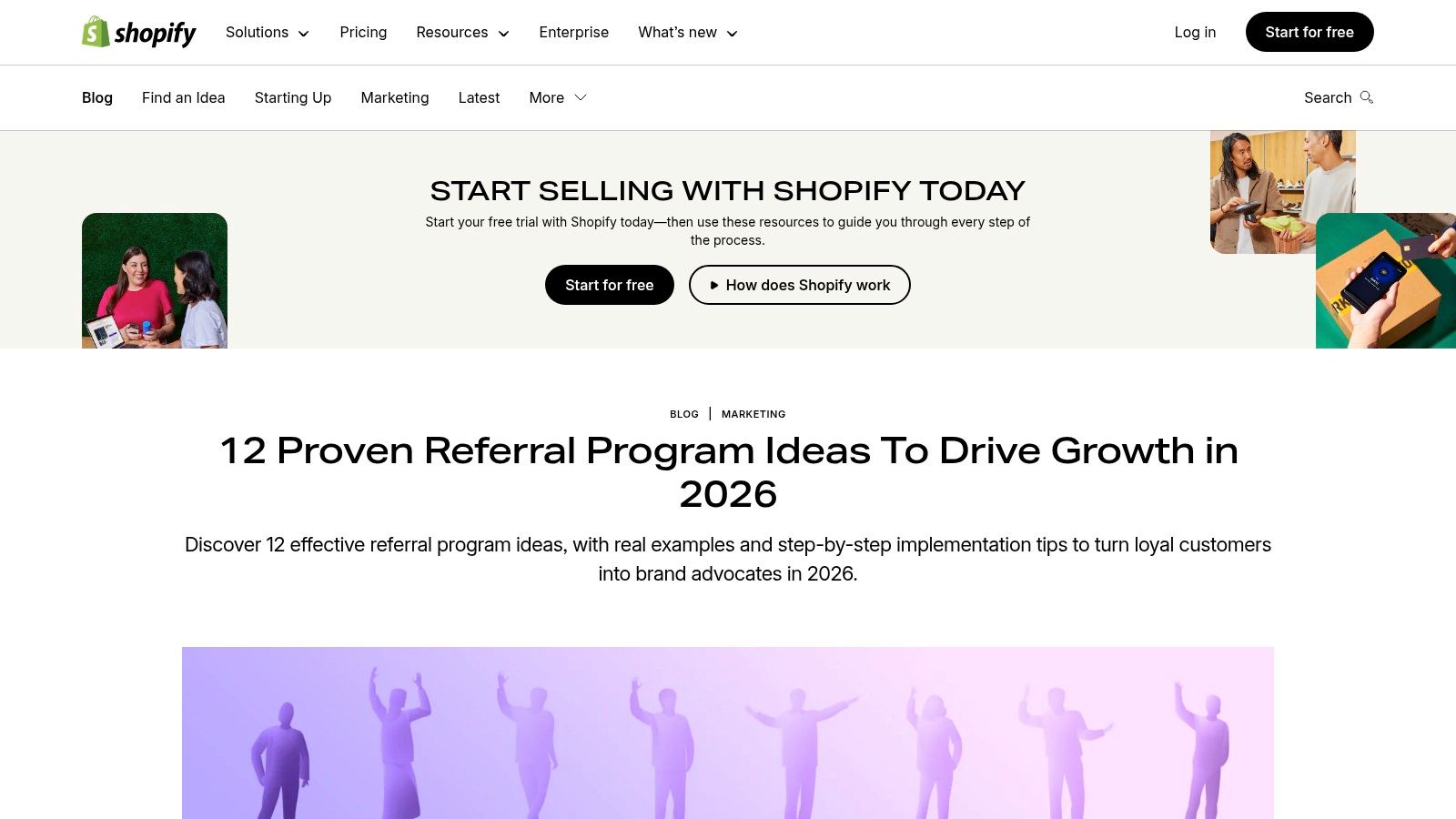
The blog’s core strength lies in its focus on practical execution within the Shopify environment. It provides clear, up-to-date guides on structuring incentives that boost Average Order Value (AOV), writing compelling copy, and optimizing the timing of your referral asks. This approach helps merchants build programs that feel native to their store experience, driving both customer acquisition and long-term loyalty.
Strategic Insight: Shopify's content implicitly champions the use of store credit as a reward mechanism. By keeping the value within your store’s ecosystem, you not only fund customer acquisition with future revenue but also significantly increase the likelihood of repeat purchases, directly boosting customer Lifetime Value (LTV) and AOV.
Key Features and Strategic Value
Shopify’s content excels at breaking down complex marketing strategies into digestible tactics. You'll find concrete examples of how to leverage urgency, exclusivity, and seasonal campaigns to maximize referral engagement. For brands aiming to replace confusing points-based systems, these articles offer a clear path toward implementing a simpler, more effective store credit model that boosts LTV.
Ecommerce-Specific Tactics: The examples are not generic; they are curated for online retail, focusing on challenges like increasing Average Order Value (AOV) and driving repeat sales.
Native Workflow Alignment: All advice is tailored to work seamlessly with Shopify’s built-in features, such as its promotions and customer account systems.
No-Cost Strategy Hub: Access is completely free, with no sign-ups or paywalls required, making it a highly accessible resource for teams of any size.
Actionable Takeaways
To make the most of the Shopify Blog, focus on articles that detail store-credit-based incentives. These are often the most effective for boosting LTV. For merchants looking to explore this further, you can find a curated collection of modern referral program ideas that align perfectly with this store credit philosophy.
Pros: Current and relevant e-commerce examples, aligns with Shopify-native workflows, free to access.
Cons: It's a resource, not a tool, so it doesn't implement the program for you. The depth of detail can vary between articles.
Website: https://www.shopify.com/blog/referral-program
2. Shopify App Store – Referral apps collection
After gathering strategic inspiration from Shopify’s blog, the official Shopify App Store is the logical next destination for putting those ideas into action. The curated "Referral apps" collection serves as a centralized marketplace where merchants can discover, compare, and install tools to build out their referral programs. This platform is essential for finding technology that aligns with a store-credit-first philosophy, allowing you to filter through solutions and read real-world merchant feedback.
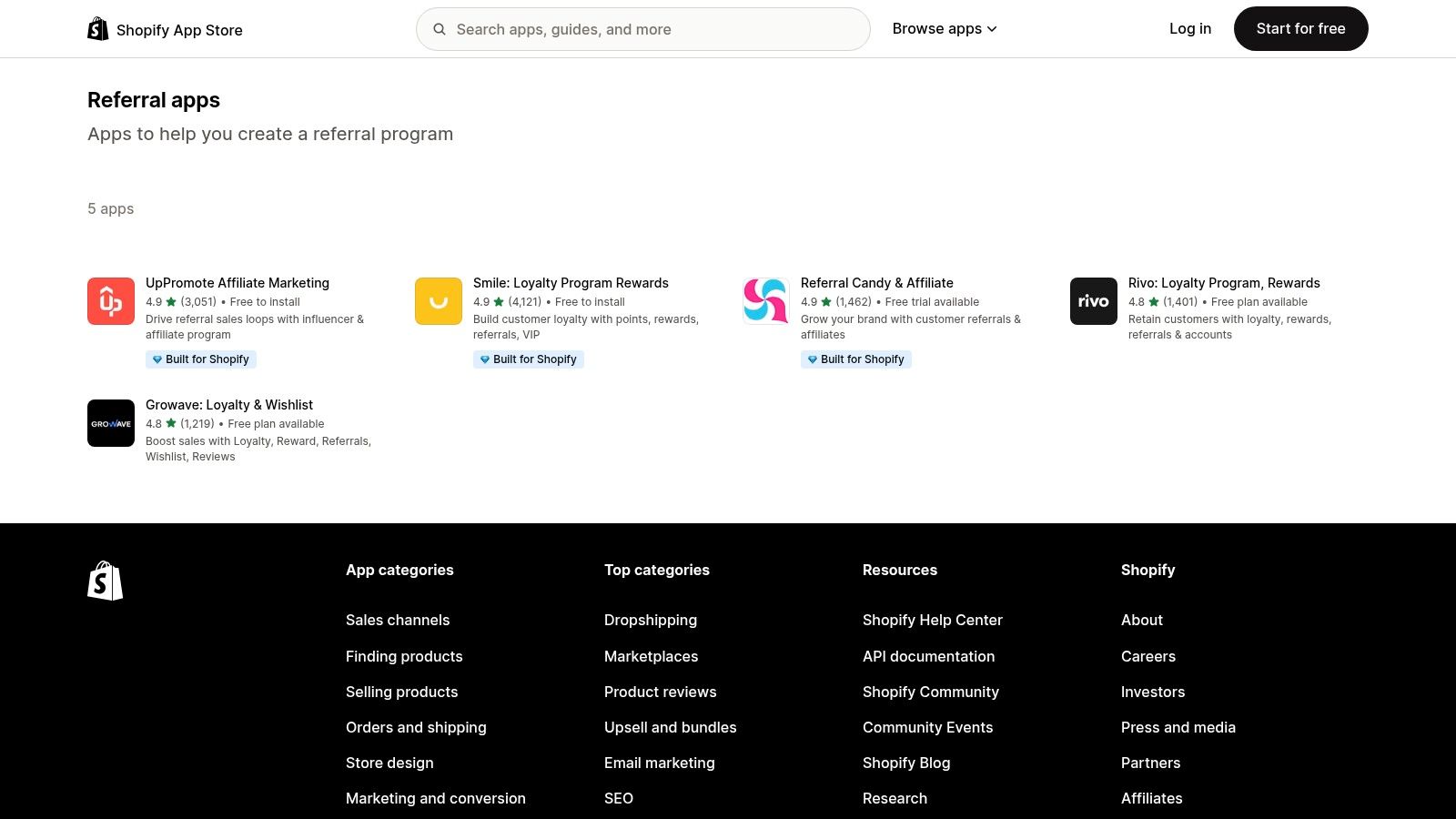
The App Store’s primary value is in providing a transparent overview of the available tools, complete with user reviews, pricing tiers, and direct installation links. It allows brands to quickly evaluate how different apps present their referral widgets, manage share flows, and handle reward issuance. This is where you can find apps specifically designed to issue native Shopify store credit, a critical feature for increasing customer lifetime value (LTV) and moving away from margin-eroding discounts.
Strategic Insight: Use the App Store not just for discovery, but for competitive analysis. By studying the screenshots and feature lists of top-rated apps, you can identify best-in-class user experiences and program structures. This helps you define what a seamless, on-brand referral experience looks like before committing to a specific provider, ensuring your program boosts both acquisition and retention.
Key Features and Strategic Value
The App Store’s collection page is a powerful research tool, offering visual referral marketing examples through app screenshots that showcase referral widgets, dashboards, and email templates. Merchant star ratings and detailed reviews offer invaluable social proof, highlighting an app’s reliability, ease of use, and customer support quality. This is crucial for vetting which apps genuinely support a native, store-credit-based system that encourages repeat purchases and higher Average Order Value (AOV).
Visual Program Examples: App galleries provide a direct look at the front-end user experience, helping you assess if the design aligns with your brand aesthetic.
Merchant-Vetted Solutions: Star ratings and reviews from other Shopify store owners help you gauge an app's real-world performance and support quality.
Direct Trial Access: Most apps offer free plans or trial periods, enabling you to test the software directly in a development store before making a financial commitment.
Actionable Takeaways
To use the Shopify App Store effectively, filter for apps that explicitly mention "store credit" or "gift cards" as a primary reward mechanism. Read recent one-star and five-star reviews to get a balanced view of an app's strengths and weaknesses. For a more detailed breakdown of how different referral and loyalty apps stack up, especially when focusing on a store credit model, you can compare Shopify loyalty apps to find the best fit for your LTV goals.
Pros: Centralized discovery with Shopify quality signals, many apps offer free plans or trials for low-risk testing, real merchant reviews provide social proof.
Cons: The collection page lacks robust side-by-side comparison tools, and the quality of apps and their support can vary significantly between vendors.
Website: https://apps.shopify.com/collections/referral-apps
3. ReferralCandy – Case studies and program examples
ReferralCandy is a powerful resource for brands seeking a direct line from inspiration to implementation. It offers an extensive library of real-world referral marketing examples from DTC brands, detailing not just the creative hooks but also the tangible results. This makes it an ideal platform for marketers who want to see proven incentive structures and then deploy a similar program using a native Shopify app.
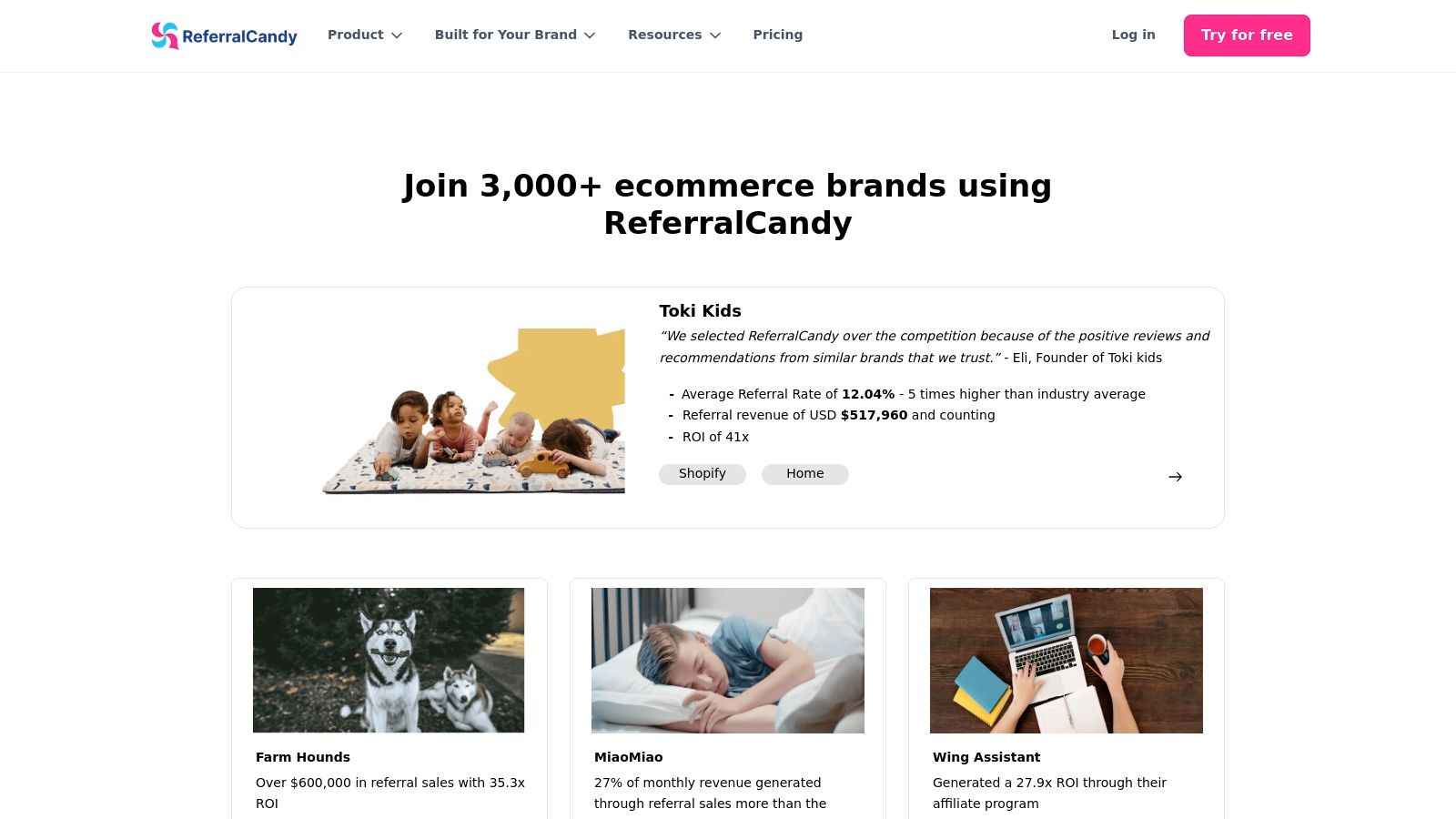
The platform’s main advantage is its blend of case study transparency and an actionable tool. You can analyze successful campaigns, see the specific incentive mixes that worked (cash, discounts, store credit), and then immediately configure your own version within their app. This approach removes the guesswork, providing a clear path for brands looking to build a program with a predictable ROI and higher lifetime value.
Strategic Insight: ReferralCandy's case studies often reveal the power of a "dual-sided" incentive, where both the advocate and the new customer receive a compelling reward. By analyzing these examples, brands can model reward structures that maximize participation and conversion. Opting for store credit rewards in this model is a key strategy for increasing Average Order Value (AOV), as customers are more likely to spend above their credited amount.
Key Features and Strategic Value
ReferralCandy provides a treasure trove of data-backed examples that are perfect for de-risking your program launch. Instead of starting from scratch, you can model your incentives, email copy, and promotional landing pages based on what has already succeeded. Many examples can be adapted to a store credit system to boost customer LTV and AOV, even if the original case study used discounts.
DTC Case Studies with Metrics: Dozens of examples showcase real ROI, referral rates, and revenue generated, offering concrete benchmarks for your own program.
Varied Incentive Models: The library includes programs using cash, tiered discounts, and store credit, allowing you to compare strategies and choose one that protects your margins and encourages repeat business.
Native Shopify Integration: The accompanying app enables a quick and seamless setup, allowing merchants to replicate the successful programs they see in the case studies.
Transparent Pricing: Clear pricing tiers, though they include a success fee, allow for straightforward budgeting and financial planning.
Actionable Takeaways
To get the most value, filter the case studies to find brands similar to yours. Pay close attention to their reward structure and consider how a store credit incentive could improve their results by increasing repeat purchases. For Shopify store owners, this is an excellent opportunity to see how other brands have structured their programs before implementing one yourself. To dig deeper into how the app functions within the Shopify environment, you can explore a detailed ReferralCandy Shopify analysis.
Pros: Concrete DTC results and real-world examples to mirror, clear pricing tiers to support budgeting and planning.
Cons: Success fee model adds a variable cost as the program scales, skews toward SMB/mid-market use cases rather than enterprise.
Website: https://www.referralcandy.com/case-studies
4. Friendbuy – Referral marketing examples hub
For brands looking to graduate from basic referral tactics to more sophisticated, data-driven program design, Friendbuy’s content hub is a masterclass. It moves beyond high-level ideas, offering a deep library of real-world referral marketing examples, A/B-tested offer structures, and detailed breakdowns of successful campaigns from recognized brands. This resource is ideal for teams aiming to design advanced reward systems, such as tiered or stackable store credits, that drive specific business outcomes like higher LTV and AOV.
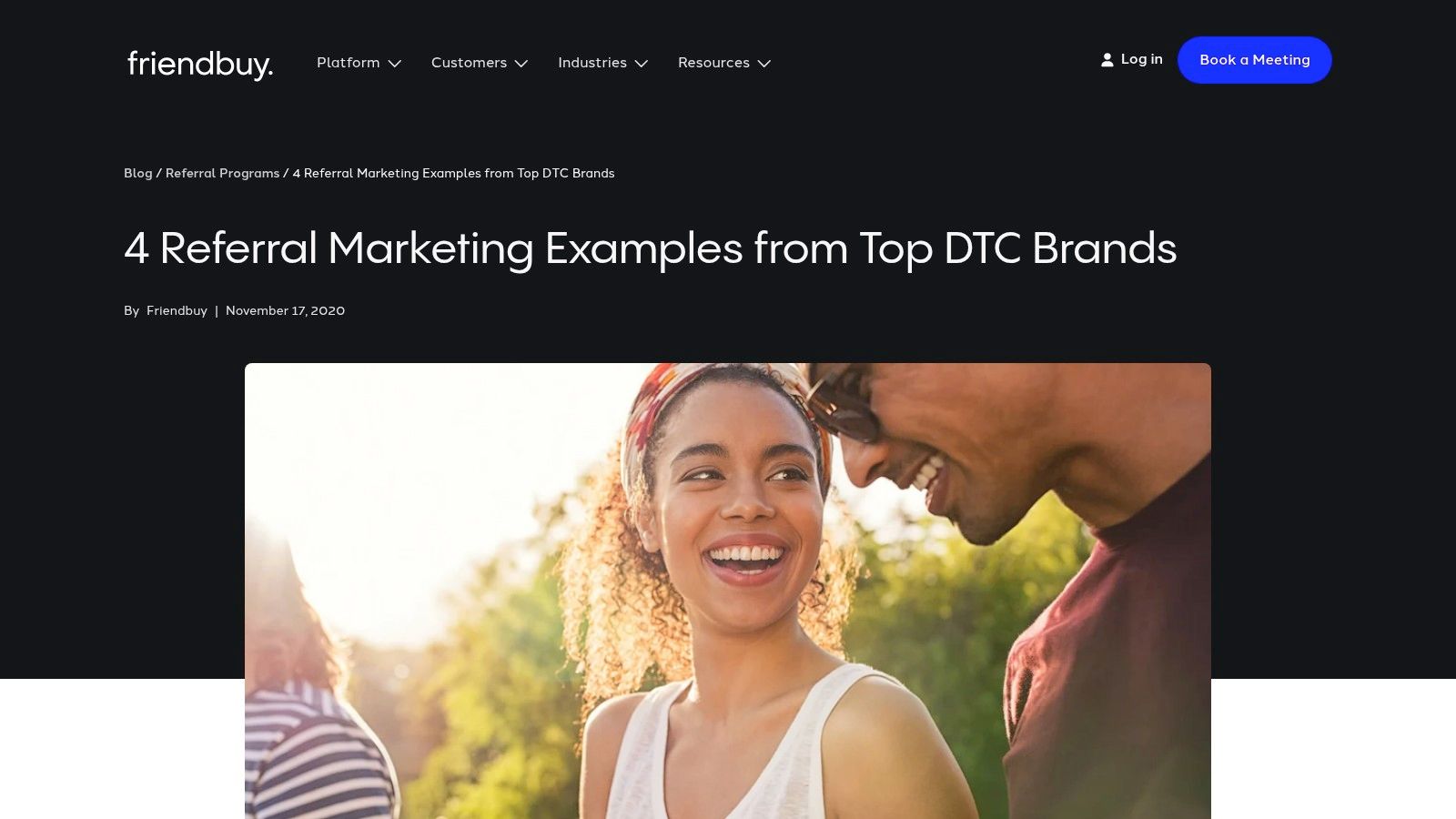
The library’s main advantage is its deconstruction of what actually works. Instead of just showing a successful campaign, Friendbuy often explains the strategic reasoning and A/B testing that led to its success. This gives marketers the "why" behind the "what," empowering them to adapt these learnings to their own customer base and build programs that fuel both acquisition and a higher lifetime value.
Strategic Insight: Friendbuy's examples often highlight the power of tiered and stackable rewards. By allowing customers to earn and combine store credit, you can create powerful incentives for both high-value referrals and repeat purchases. This strategy transforms a simple referral program into a robust engine for increasing Average Order Value (AOV) and customer Lifetime Value (LTV).
Key Features and Strategic Value
Friendbuy’s content is rich with tactical guidance, making it a goldmine for marketers refining their referral funnels. You will find vertical-specific examples and even guidance on calculating Cost Per Acquisition (CPA), helping you build a program with a clear, predictable ROI. The emphasis on store credit as a mechanism for boosting LTV is a recurring theme, providing a proven blueprint for execution.
Deep Tactical Deconstruction: Posts frequently analyze A/B test results, showing how minor changes in copy or reward structure can lead to major performance gains.
Advanced Reward Structure Ideas: The hub explores complex incentives like tiered rewards, two-sided offers, and stackable credits that encourage higher spending.
Vertical-Specific Examples: Find case studies from various industries, making it easier to find relevant strategies for your specific market and customer type.
Actionable Takeaways
To leverage Friendbuy’s hub effectively, filter for case studies in your industry or those that feature a store-credit-based reward system. Pay close attention to their A/B test breakdowns to gather insights on optimizing your own messaging and offers. This data-backed approach is crucial for designing a program that not only acquires new customers but systematically boosts LTV by keeping rewards within your store's ecosystem.
Pros: Rich, deconstructed examples including A/B insights; well-suited for higher-consideration purchases and stackable credit strategies.
Cons: Platform pricing is typically sales-led and not listed publicly; the content breadth is large, so teams must curate the most relevant pieces.
Website: https://www.friendbuy.com/blog/referral-marketing-examples
5. Referral Rock – Examples, templates, and transparent pricing
Referral Rock serves as both a powerful software platform and a rich resource hub, making it a valuable destination for brands planning a referral program from the ground up. It combines in-depth referral marketing examples with a transparently priced tool, allowing marketers to see concrete program mechanics and then map them directly to a scalable software solution. This is ideal for teams that want to visualize advanced reward structures, like store credit tiers, before committing to a platform.
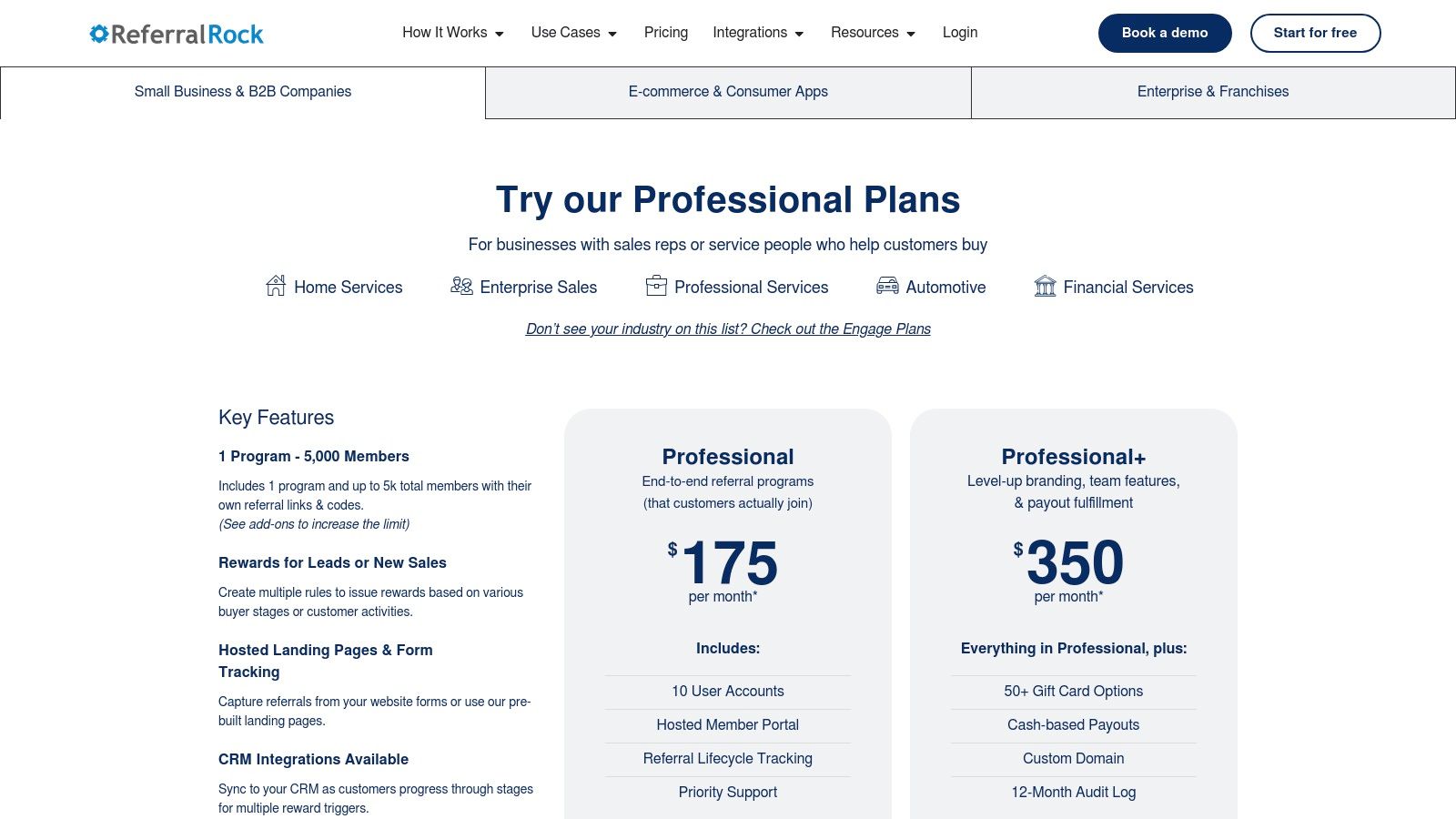
The platform’s strength is its clarity. By publishing its pricing and feature tiers openly, Referral Rock demystifies the software selection process. Its resources showcase everything from member portal designs to email automation workflows, giving brands a clear picture of what a sophisticated, multi-channel referral program looks like when designed to boost Average Order Value (AOV) and customer lifetime value.
Strategic Insight: Referral Rock’s detailed examples of two-sided rewards and milestone-based incentives offer a blueprint for increasing customer Lifetime Value (LTV). By structuring a program where advocates earn progressively better rewards (like higher store credit amounts), you gamify the referral process and encourage sustained participation, turning one-time referrers into long-term brand evangelists who drive repeat business.
Key Features and Strategic Value
Referral Rock excels at illustrating complex reward logic that can be adapted for any business model, including DTC ecommerce. Its examples provide clear templates for building programs that drive specific outcomes, like boosting repeat purchases through store credit or rewarding top advocates with exclusive perks. The focus on native integration with platforms like Shopify makes it a strong contender for LTV-focused brands.
Advanced Reward Models: The platform showcases sophisticated patterns like tiered rewards, recurring commissions, and two-sided incentives that can be easily adapted to a store-credit system.
Transparent Pricing Tiers: With clear pricing for Professional, Engage, and Enterprise plans, teams can accurately budget and forecast costs without hidden fees.
Cross-Channel Examples: Resources cover B2C and B2B workflows, providing a wide range of tactical ideas for email campaigns, social sharing widgets, and landing pages.
Actionable Takeaways
To leverage Referral Rock effectively, start by reviewing their example reward structures and imagine how they could be implemented using store credit instead of cash. This approach aligns the program with LTV and AOV goals by keeping all reward value within your Shopify store’s ecosystem. The transparent pricing also makes it simple to compare the potential cost against the projected revenue from referred customers.
Pros: Clear, published pricing with trial options, robust examples of reward logic and workflow automation.
Cons: Requires more setup than single-purpose Shopify apps, add-ons and overages can increase total cost at higher volumes.
Website: https://referralrock.com/pricing/
6. Yotpo – Loyalty & Referrals case studies and Shopify app listing
For DTC brands looking for enterprise-grade referral marketing examples backed by hard data, Yotpo’s collection of case studies is an essential resource. It moves beyond theoretical advice by showcasing quantifiable results from well-known brands, detailing specific lifts in Average Order Value (AOV), repeat purchase rates, and customer Lifetime Value (LTV). Yotpo frames referrals as a key component of a larger customer retention ecosystem, making it ideal for teams wanting an integrated strategy.
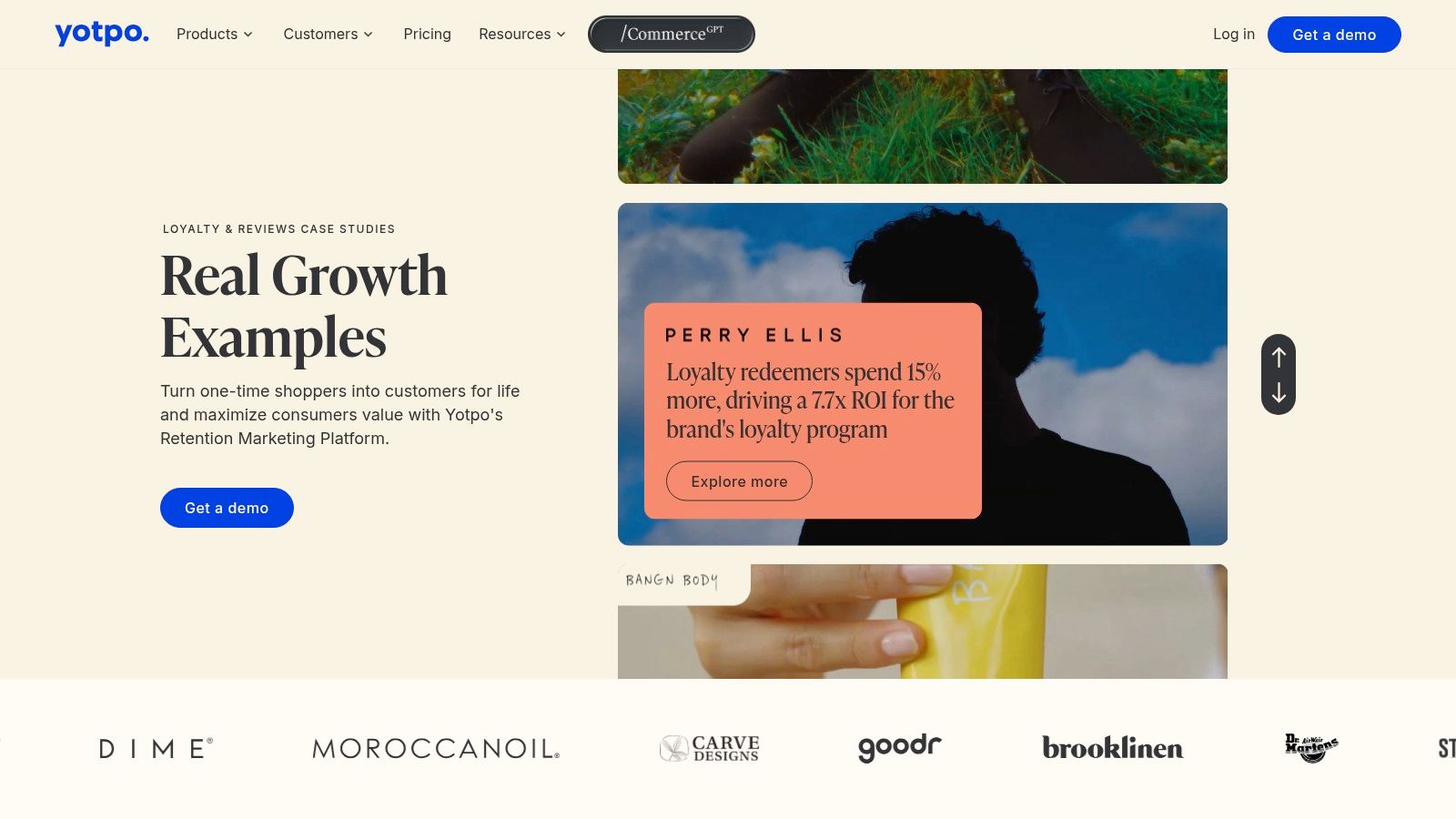
The platform's strength lies in its comprehensive approach, combining loyalty, referrals, reviews, and SMS marketing into a single suite. While many examples feature traditional points-based systems, the underlying strategic insights are invaluable for any brand. Marketers can analyze how major retailers structure tiered rewards and VIP programs to drive specific customer behaviors, then adapt those concepts to a more modern, margin-friendly store credit model within their own Shopify store to boost LTV.
Strategic Insight: Yotpo’s case studies demonstrate the power of integrating referrals with a broader loyalty framework. By rewarding advocates for more than just purchases (like leaving reviews or social follows), brands create multiple engagement touchpoints. These principles can be applied using Shopify's native store credit, creating a simpler, more effective loyalty loop that directly contributes to higher LTV and AOV.
Key Features and Strategic Value
Yotpo’s content provides a blueprint for building a multi-layered retention strategy where referrals play a pivotal role. The detailed case studies give marketers the data they need to build a business case for investing in a robust program. By examining how successful brands use points and tiers, you can reverse-engineer the psychology and apply it to a simpler store credit system that keeps value locked within your ecosystem.
Quantifiable Outcomes: Case studies provide concrete metrics, showing the direct impact of loyalty and referral programs on revenue and customer retention.
Integrated Retention Suite: The platform connects referrals to reviews, SMS, and loyalty, offering a holistic view of customer engagement that goes beyond single-channel tactics.
Enterprise-Grade Examples: Learn from sophisticated campaigns run by established brands, offering insights into scaling a referral program effectively.
Actionable Takeaways
Use Yotpo's case studies as a source of strategic inspiration rather than a tactical playbook for points systems. Focus on why their featured programs work: tiered rewards, exclusivity, and multi-action incentives. Then, translate these successful concepts into a Shopify-native store credit program. For example, instead of awarding points for a referral, issue a high-value store credit reward that encourages a larger subsequent purchase and boosts AOV.
Pros: Enterprise-level examples with measured outcomes, integrated suite combines reviews, loyalty, and referrals for a holistic strategy.
Cons: Full-suite pricing can be complex and requires a demo, and implementation is heavier than single-purpose referral tools.
Website: https://www.yotpo.com/case-studies
7. G2 – Referral Software Category (Comparisons with Screenshots and Reviews)
For merchants ready to move from strategy to implementation, G2's referral software category is an essential research hub. While not a direct source of referral marketing examples, it serves as a neutral marketplace to evaluate the platforms that power these programs. G2 aggregates dozens of tools, providing verified user reviews, screenshots, and comparison grids that help brands find a solution that aligns with their LTV and AOV goals.
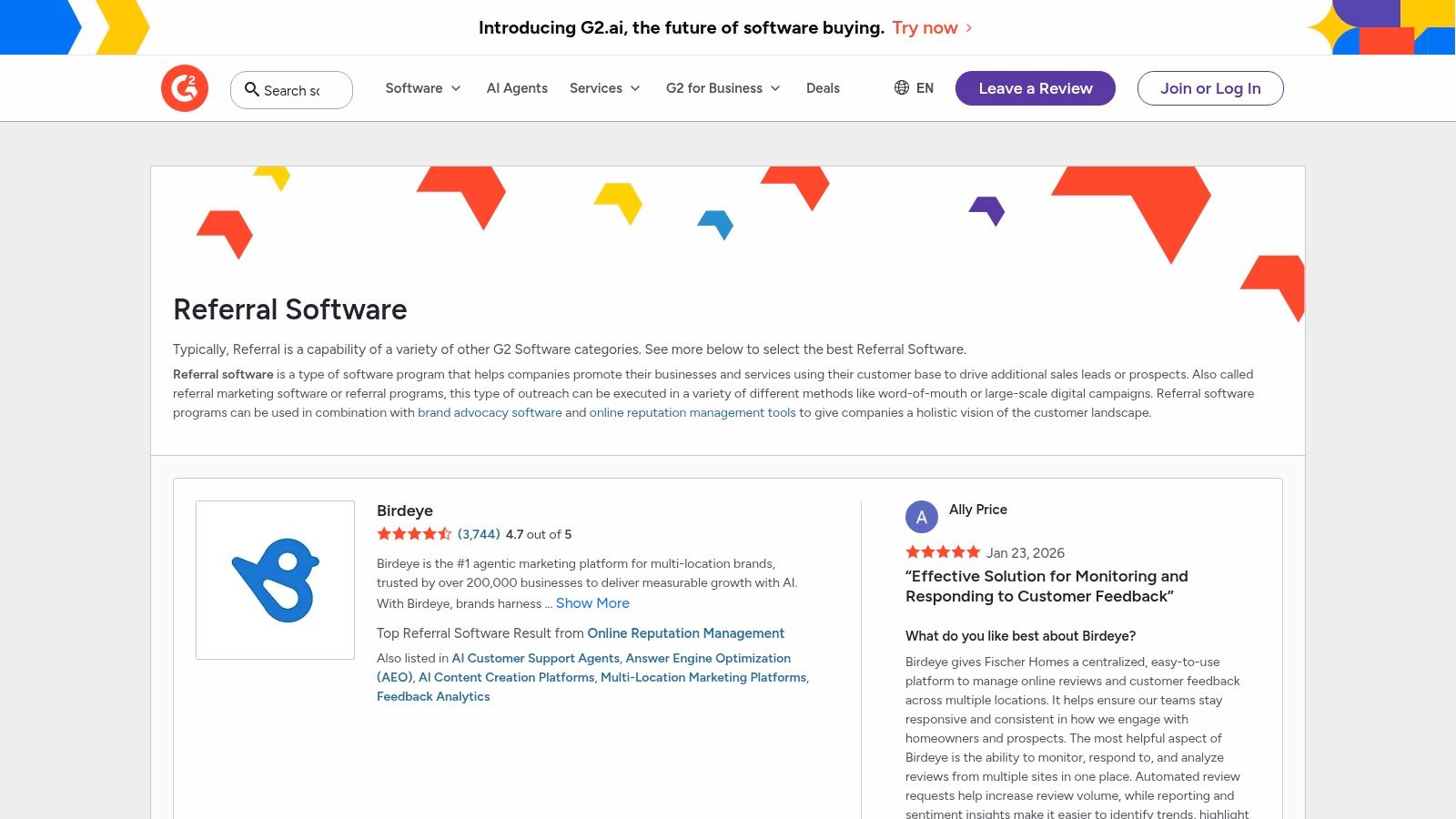
The platform's real value for DTC brands lies in its ability to filter through the noise. Instead of relying on vendor websites, you can access unfiltered user feedback on implementation, customer support, and feature performance. This is particularly crucial for Shopify merchants seeking to transition from generic points systems to a more effective, LTV-focused store credit model, as reviews often reveal a tool's true compatibility with this approach.
Strategic Insight: Use G2 not just to find a tool, but to validate a strategy. Look for reviews that specifically mention "store credit," "Shopify integration," or "LTV." This user-generated feedback is the most reliable indicator of whether a platform can truly deliver on the promise of a margin-friendly, native-feeling referral program that boosts repeat purchases and average order value.
Key Features and Strategic Value
G2 provides a structured way to compare potential software partners side-by-side. The comparison grids and detailed feature matrices allow you to quickly identify tools that offer the capabilities you need, such as automated reward fulfillment and deep integration with Shopify's customer accounts and native store credit system. This process de-risks the investment by highlighting potential pain points before you even book a demo.
Verified User Reviews: Access unbiased commentary on everything from ease of setup to the quality of customer support, helping you avoid platforms with poor track records.
Side-by-Side Comparison: The "Compare" feature allows you to create custom grids to evaluate up to four platforms on features, pricing models, and user satisfaction ratings.
Segment-Specific Filtering: Filter tools by market segment (small business, mid-market) to find solutions that are priced and scaled appropriately for your brand's size and growth stage.
Actionable Takeaways
To leverage G2 effectively, start by filtering for platforms with high satisfaction ratings and a strong focus on e-commerce. Read reviews from companies of a similar size and pay close attention to comments about Shopify integration and the flexibility of the reward system. This will help you identify tools that are well-suited to running a store credit program that drives both AOV and long-term customer loyalty.
Pros: Neutral marketplace for side-by-side vendor comparisons, authentic user experiences validate or debunk vendor claims, free to access and browse.
Cons: Some listings blend pure referral tools with broader loyalty platforms, requiring careful filtering. Pricing data is often self-reported by vendors and may be incomplete.
Website: https://www.g2.com/software/referral
Referral Marketing: 7-Source Comparison
Option | Implementation complexity 🔄 | Resource requirements ⚡ | Expected outcomes 📊⭐ | Ideal use cases 💡 | Key advantages ⭐ |
|---|---|---|---|---|---|
Shopify Blog – Referral program ideas and examples | Low — read and apply ideas (no tooling) | Minimal — free content, no install | Inspiration-only; variable depth (⭐⭐) | Early-stage teams seeking quick creative ideas | Free, Shopify-aligned tactics and copy templates |
Shopify App Store – Referral apps collection | Low–Medium — install third‑party apps quickly | Low — many free plans/trials available | Fast trials; outcomes depend on chosen app (⭐⭐⭐) | Shortlisting and rapid testing of referral UX | Centralized gallery, screenshots, reviews, direct install |
ReferralCandy – Case studies and program examples | Medium — app install + configuration | Medium — transparent pricing + success fees | Replicable DTC results and ROI metrics (⭐⭐⭐⭐) | SMBs wanting concrete examples and Shopify-native app | Dozens of case studies, clear pricing, ready templates |
Friendbuy – Referral marketing examples hub | Medium–High — advanced design and testing | Medium–High — sales-led pricing, tailored setup | High-quality, A/B-tested learnings (⭐⭐⭐⭐) | Teams designing sophisticated, brand-level programs | Deep tactical deconstruction and A/B insights |
Referral Rock – Examples, templates, and transparent pricing | High — more setup and workflow configuration | High — published plans; add-ons may raise cost | Robust automation and multi‑use workflows (⭐⭐⭐⭐) | B2B/B2C teams needing complex reward logic | Advanced reward patterns, CRM/ecommerce integrations |
Yotpo – Loyalty & Referrals case studies and Shopify app listing | High — full-suite implementation | High — enterprise-style pricing and demos | Measurable lifts in AOV/LTV/repeat purchase (⭐⭐⭐⭐) | Enterprise teams seeking integrated retention stack | Integrated loyalty + referrals + UGC for end-to-end retention |
G2 – Referral software category (comparisons with screenshots and reviews) | Low — browse, filter and compare vendors | Minimal — free access to reviews and grids | Good shortlist validation; outcomes vendor-dependent (⭐⭐⭐) | Vendor selection and social-proof validation before demos | Neutral reviews, comparison grids, user commentary |
Build Your Profit Engine: The Shift from Discounts to Ownership
We've explored a wide array of powerful referral marketing examples, from the comprehensive case studies on ReferralCandy and Friendbuy to the practical app collections on the Shopify App Store. The journey through these successful programs reveals a clear, undeniable pattern: the most effective, profitable, and sustainable referral strategies are moving away from the transactional nature of one-off discounts. Instead, they are embracing a model built on genuine customer value and long-term relationships.
The core insight from dissecting these top-tier programs is the strategic shift towards incentives that foster a sense of ownership and belonging. A 15% off coupon is a fleeting transaction; it encourages a single purchase. But store credit, integrated directly into a customer's Shopify account, feels like a tangible asset. It’s their money to spend in your store, creating a powerful psychological hook that pulls them back for their next purchase, inherently boosting repeat purchase rates and LTV.
This transition from discount codes to store credit is not just a semantic change. It’s a fundamental upgrade to your business model, directly addressing the pain points many Shopify merchants face with traditional loyalty apps. Forget confusing point systems and the margin-crushing race to the bottom with endless promotions. By leveraging Shopify's native store credit functionality, you simplify the customer experience and create a self-sustaining profit engine fueled by your most passionate advocates.
Your Roadmap to a High-LTV Referral Program
As you prepare to implement these strategies, the key is to move from inspiration to action. The referral marketing examples we've covered demonstrate that success isn't about copying a template, but about adapting core principles to your unique brand and customer base.
Here are the critical takeaways to guide your next steps:
Prioritize Simplicity: The best programs are effortless for both the advocate and the new customer. Complicated rules, confusing point conversions, or expiring coupons create friction. A simple "Give $20, Get $20" in store credit is instantly understood and valued.
Focus on Margin-Friendly Rewards: Store credit is a game-changer for profitability. Unlike a cash-payout or a steep discount that erodes your margin on the entire cart, store credit ensures the reward is reinvested directly back into your business, often encouraging customers to spend more to use their full balance, thus increasing AOV.
Lean into Your Brand: Your referral program is an extension of your brand's voice and values. Use compelling copy, on-brand creative, and messaging that makes your advocates feel like true partners, not just cogs in a marketing machine.
Choose the Right Tool for the Job: As seen in the G2 comparisons and Shopify App Store listings, not all referral tools are created equal. Avoid bloated, complex platforms that require another dashboard and another login. Seek out a lightweight, native Shopify solution that integrates seamlessly with the tools you already use, especially Shopify's own store credit system. This reduces technical debt and simplifies your workflow.
Building a world-class referral program is one of the highest-leverage activities you can undertake for your ecommerce brand. It transforms your happy customers into a dedicated, high-performing acquisition channel that drives profitable, long-term growth. The time to move beyond the limitations of discounts and points is now. Embrace the power of store credit and start building a community of owners, not just buyers.
Ready to build a referral program that boosts LTV and AOV without complex points or deep discounts? Redeemly is the lightweight, Shopify-native solution that powers high-performance referral and retention programs using store credit. See how easy it is to launch your profit engine at Redeemly.


Join 7000+ brands using our apps